Online Therapy for Adult ADHD Can Help You Start and Finish Tasks

Online therapy for adult ADHD can help you manage procrastination with practical skills you use between video sessions. Look for a licensed therapist with adult ADHD experience. Together, you can choose one task that keeps getting stuck, break it into smaller steps, and test a plan for starting it.
That matters when a busy schedule makes getting to an office another task to put off. Virtual sessions can make care easier to fit into your week, while giving you space to work on time management, organization, and the stress that comes with falling behind. According to the National Institute of Mental Health, ADHD symptoms often persist into adulthood and can interfere with daily functioning, making structured support especially valuable.
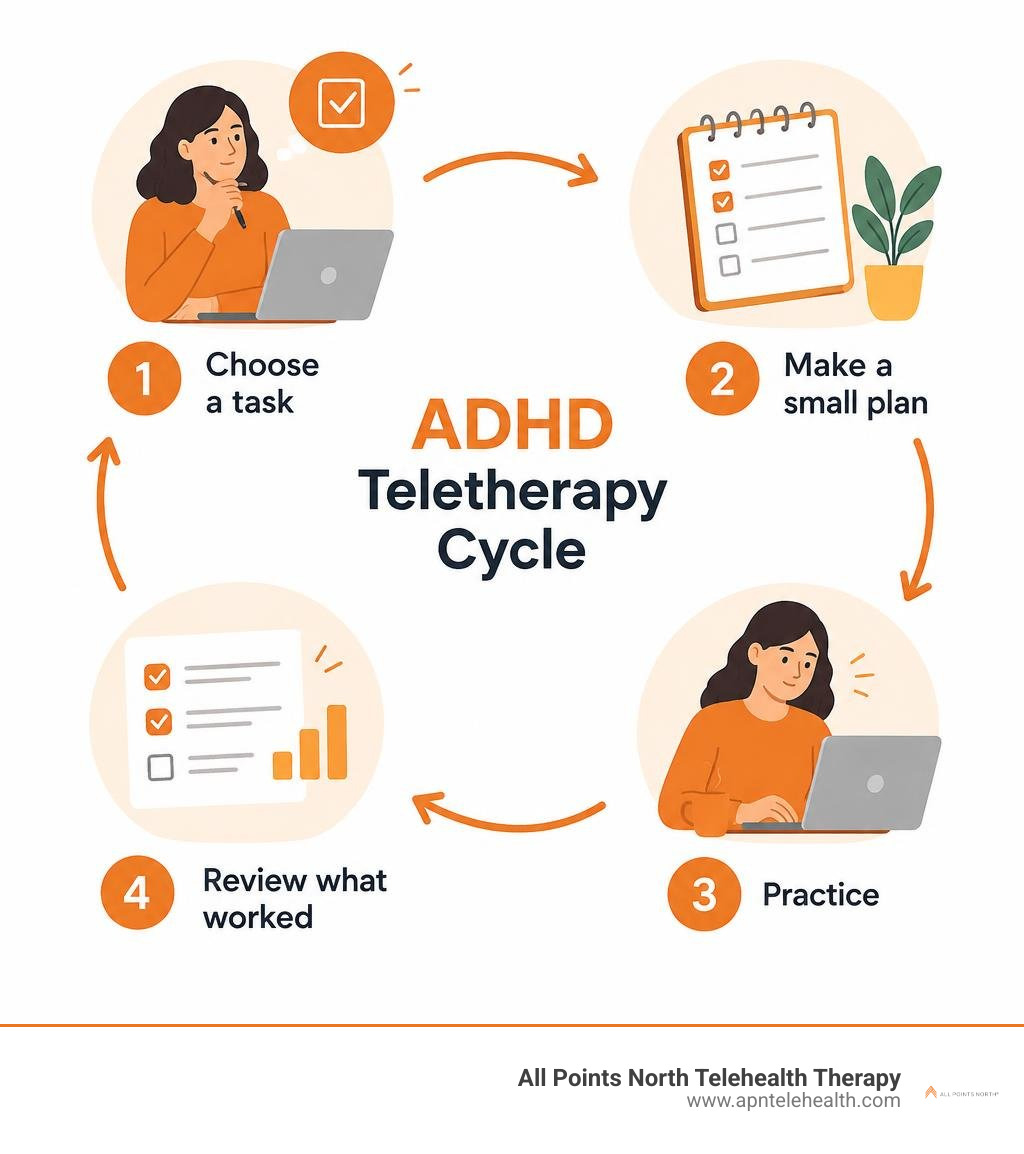
How Online Therapy for Adult ADHD Works to Break Procrastination
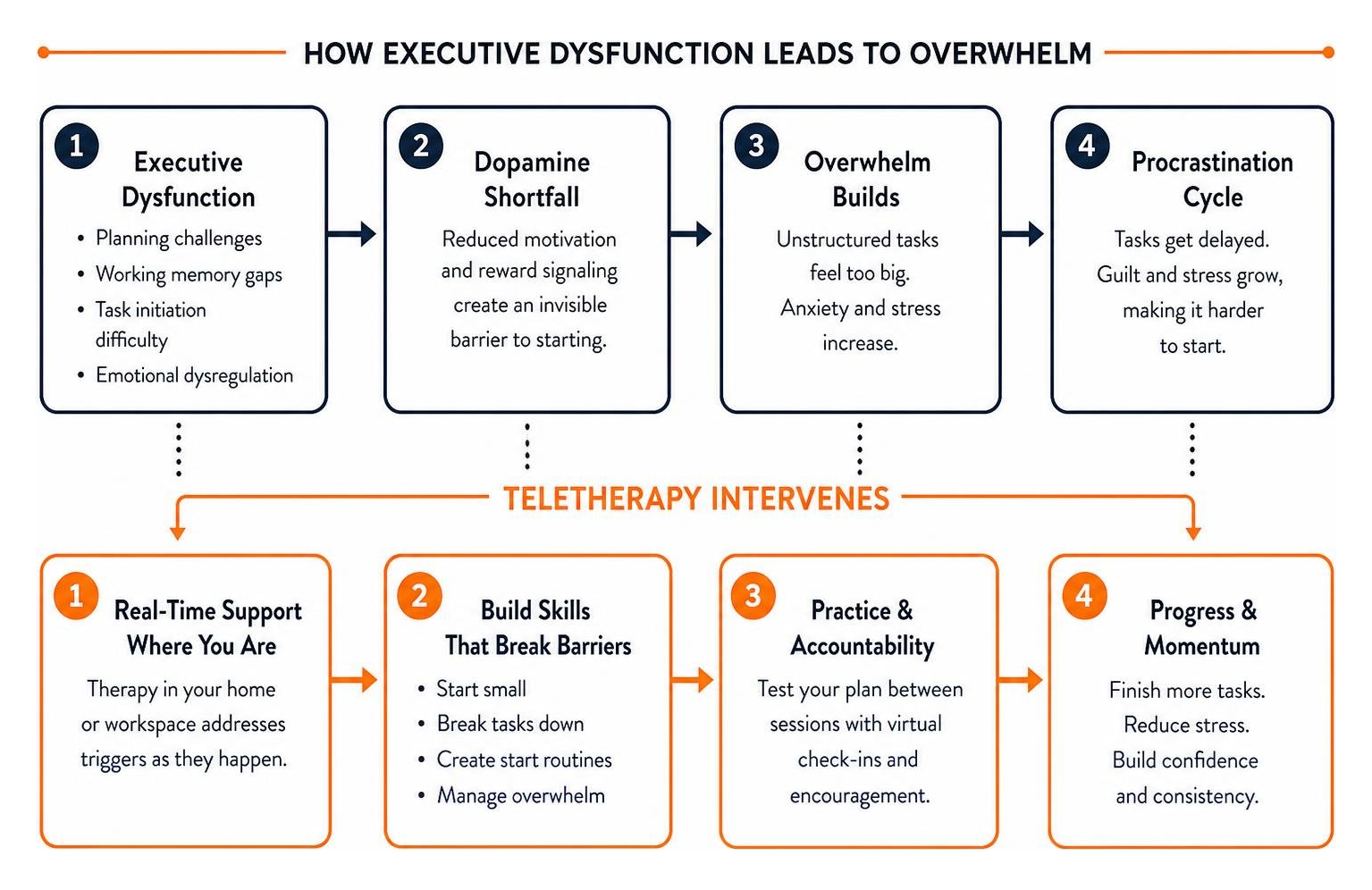
Procrastination in adults with attention-deficit/hyperactivity disorder rarely stems from laziness, poor moral discipline, or a simple lack of motivation. Instead, it is fundamentally rooted in executive dysfunction—a neurobiological disruption in the prefrontal cortex and related neural networks that govern planning, working memory, task initiation, prioritization, and emotional regulation. When faced with an unstructured, complex, or low-stimulation assignment, an ADHD brain experiences a shortfall in dopamine and norepinephrine signaling. This chemical imbalance creates an invisible, overwhelming cognitive barrier that makes starting feel practically impossible.
Through remote counseling, we work with you directly inside the environment where your challenges actually happen: your home or workspace. Rather than discussing productivity strategies in an artificial, abstract clinical office, virtual care allows us to address environmental triggers, clutter, and digital distractions in real time. We build immediate task initiation routines, implement virtual accountability checkpoints such as digital body doubling, and untangle the chronic emotional paralysis and rejection sensitivity that often accompany lifelong delays.
Benefits of Virtual Care for Neurodivergent Adults
Traditional in-person therapy often introduces logistical hurdles that can derail individuals with ADHD before their appointment even begins. Misplacing keys, navigating heavy traffic, misjudging travel times due to executive lag, and sitting in overstimulating, brightly lit waiting rooms all create unnecessary cognitive friction. Virtual therapy removes these barriers entirely.
| Feature | Traditional In-Person Therapy | Virtual ADHD Teletherapy |
|---|---|---|
| Commute Friction | High (traffic, parking, transit delays) | None (join directly from your device) |
| Sensory Control | Low (fluorescent lights, clinic noise) | High (your own lighting, seating, and comfort) |
| Scheduling Flexibility | Rigid time slots, higher cancellation risk | Flexible, fits directly into work or home routines |
| Real-Time Environment | Artificial clinic setting | Direct application in your daily living space |
| Geographic Access | Limited to local clinicians | Access to specialized statewide providers |
By cutting out the sensory overload and scheduling stress, virtual sessions allow you to preserve your mental bandwidth and executive energy for meaningful clinical progress.
Target Symptoms: Impulsivity, Time Blindness, and Organization
Adult ADHD involves several interconnected cognitive and behavioral patterns that feed chronic procrastination loops. Teletherapy directly targets these core mechanisms:
- Time Blindness: Difficulty sensing the passage of time or accurately estimating how long projects take to complete. We introduce concrete external cues, analog and visual timers, and structured micro-blocks that make temporal flow tangible.
- Working Memory Deficits: The tendency to lose track of multi-step instructions halfway through execution or forget essential sub-tasks. We design personalized external tracking systems, visual boards, and immediate note-taking protocols to eliminate mental clutter.
- Impulsivity and Dopamine Seeking: Abandoning low-stimulation priorities in favor of immediate novel rewards or digital distractions. We use behavioral modification techniques, implementation intentions, and habit-stacking to pair necessary obligations with manageable, predictable reward structures.
- Emotional Overwhelm and Avoidance: Experiencing intense shame, self-criticism, or anticipatory dread due to past setbacks. We focus on cognitive reframing and distress-tolerance techniques to dismantle perfectionist avoidance loops before they cause paralysis.
To explore deeper insights into neurodivergent mental health and evidence-based coping strategies, you can read more on our mental health blog.
Core Modalities and Finding the Right Clinical Match
Effective ADHD teletherapy is not open-ended venting or generic advice; it is structured, evidence-based care tailored to the neurodivergent brain. Lasting progress depends on both the clinical framework utilized and the strength of the therapeutic alliance formed between you and your clinician.
Choosing the Right Modality: CBT and Online Therapy for Adult ADHD
Cognitive Behavioral Therapy (CBT) adapted specifically for adult ADHD stands as the gold standard of non-pharmacological care. Unlike generic talk therapy, ADHD-focused CBT targets the recurring cognitive distortions—such as catastrophic thinking, emotional reasoning, and all-or-nothing perfectionism—that trigger avoidance behaviors whenever a demanding task arises.
In addition to cognitive restructuring, sessions incorporate targeted executive-function coaching, practical behavioral activation, and mindfulness practices designed to regulate nervous system arousal and reduce impulsive task-switching. Therapists help you break down monolithic projects into bite-sized actionable milestones, test friction-reduction techniques, and build pragmatic routines designed for sustainable follow-through. To help clients access structured, personalized support, we offer tailored telehealth care packages that combine routine clinical sessions with intentional progress tracking.
Evaluating Credentials and Platforms for Online Therapy for Adult ADHD

When selecting a virtual provider, verify that you are working with a licensed master’s or doctoral-level clinician (such as an LPC, LCSW, LMFT, or PsyD) who possesses specialized clinical training and ongoing experience in neurodivergence and adult ADHD.
When reviewing platforms and clinicians, keep these critical factors in mind:
- Platform Security: Ensure the service operates on a dedicated, HIPAA-compliant telehealth platform with end-to-end encryption rather than standard commercial video software.
- Cost and Transparency: Look for clear session pricing, upfront statements on out-of-pocket costs, options for sliding-scale fees, or straightforward superbills provided for out-of-network insurance reimbursement.
- Specialized Supervision: Ensure the clinical team receives structured peer review and supervision centered around adult neurodiversity and co-occurring conditions like anxiety or depression.
- Provider Red Flags: Be cautious of providers who dismiss ADHD as simple disorganization or lack of willpower, propose rigid organizational systems without customization, dominate the conversation, or practice across state lines without appropriate licensure.
Navigating the Teletherapy Journey: From First Session to Coordinating With Prescribers
Starting a new clinical relationship can feel daunting, especially for adults who have experienced frustration with previous therapeutic attempts. Knowing what to expect across each phase of care minimizes anxiety and sets you up for steady, sustainable progress.
What to Expect During Your Initial Virtual Intake
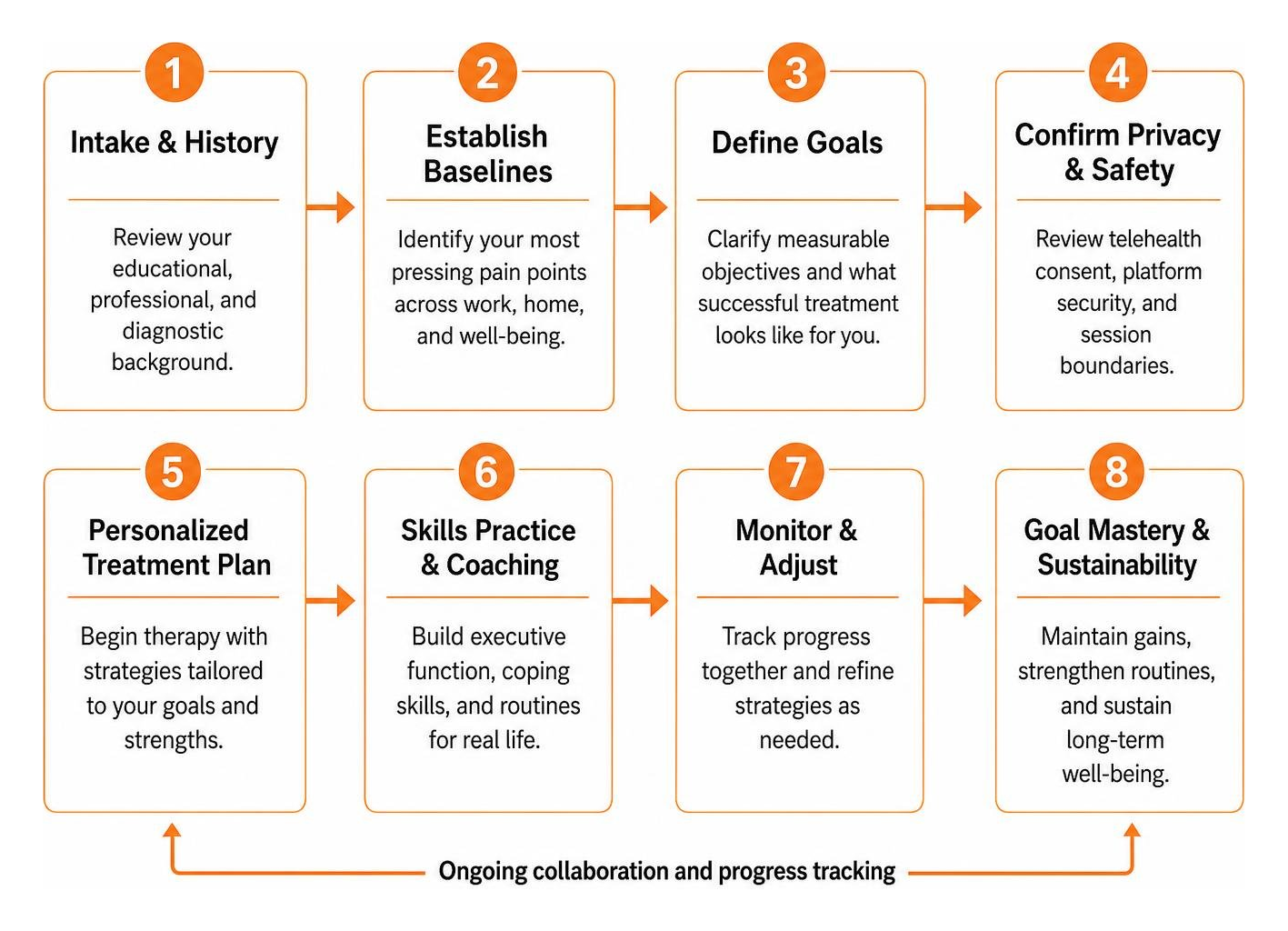
Your first session centers on establishing a collaborative therapeutic alliance while gaining a holistic understanding of your unique cognitive profile, lifestyle, and personal goals. During this intake, your therapist will:
- Review History: Explore your educational, professional, and diagnostic background, including childhood patterns and past interventions.
- Establish Baselines: Identify your most pressing friction points, whether they involve chronic work deadlines, domestic organization, financial management, or emotional burnout.
- Define Measurable Objectives: Clarify exactly what successful treatment looks like for you (for example, initiating challenging work projects within ten minutes rather than hours, or sustaining focus for 25-minute study intervals).
- Establish Pacing and Modalities: Agree on a comfortable session rhythm and prioritize the specific executive skills you want to target first.
- Confirm Privacy Standards: Walk through telehealth consent, emergency protocols, platform safety measures, and session confidentiality boundaries.
Coordinating With Prescribers and Knowing When Treatment Is Working
For many adults, a multimodal approach pairing psychotherapy with medication yields the most effective and durable results. While psychotherapists do not prescribe pharmaceuticals, we frequently coordinate with your medical doctor, psychiatrist, or psychiatric nurse practitioner to ensure all aspects of your care are closely aligned and complementary.
Therapy is succeeding when you notice measurable changes in your daily functioning, such as:
- Noticeably less emotional resistance, dread, and physiological tension when starting complex tasks.
- Faster recovery from disruptions, schedule changes, or missed deadlines without falling into shame spirals.
- Increased consistency with realistic daily organizational systems and personal routines.
- Improved self-advocacy and communication with colleagues, employers, and family members regarding focus needs and boundaries.
Therapy reaches a natural conclusion or steps down into periodic maintenance check-ins once you have consistently integrated these executive tools into your everyday life. For common logistical details about scheduling, tech setup, and session frequency, consult our frequently asked questions.
Frequently Asked Questions About ADHD Teletherapy
Can online therapy officially diagnose adult ADHD?
Yes, licensed doctoral psychologists and clinical specialists can conduct comprehensive diagnostic evaluations through secure telehealth platforms. These evaluations use standardized rating scales, clinical interviews, and developmental histories that adhere to DSM-5 criteria.
How can teletherapy work alongside prescribed ADHD medication?
Therapy and medication address different facets of ADHD. While medication balances neurotransmitter activity to enhance focus and reduce impulsivity, therapy equips you with behavioral strategies, organizational frameworks, and emotional regulation skills. Your therapist can monitor your functional outcomes and provide observations you can share with your prescribing doctor during check-ins.
What are the main red flags of an unqualified virtual ADHD provider?
Watch out for clinicians who suggest that ADHD can be cured through willpower, use rigid generic planners without adapting to your needs, fail to maintain strict HIPAA compliance, or operate without valid clinical licensing in your state of residence.
Conclusion

Chronic procrastination does not define your capabilities or intelligence. When you understand your neurochemistry and build external structures that support executive function, staying on top of your responsibilities becomes achievable.
At All Points North Telehealth Therapy, our master's and doctoral-level clinicians provide HIPAA-compliant, outcome-tracked care tailored to your daily challenges. Discover how specialized individual therapy can help you break cycle-of-avoidance habits, master your workflow, and regain momentum.