
Online Grief Counseling: Support That Fits Your Life
Online grief counseling lets you work through a loss with a licensed therapist from a private place that works for you. To get started, look for a therapist licensed in your state, ask how they approach grief, and book a video session. You do not need to know what to say or feel ready to "move on."
Virtual sessions can make it easier to fit care around work and daily life. They can also sit alongside support from family and friends. According to the American Psychological Association, grief can affect both emotional and physical health, and professional support can help people process loss in a healthy way. If you are in immediate danger or thinking about suicide, call 911 or the 988 Suicide & Crisis Lifeline rather than waiting for an appointment.
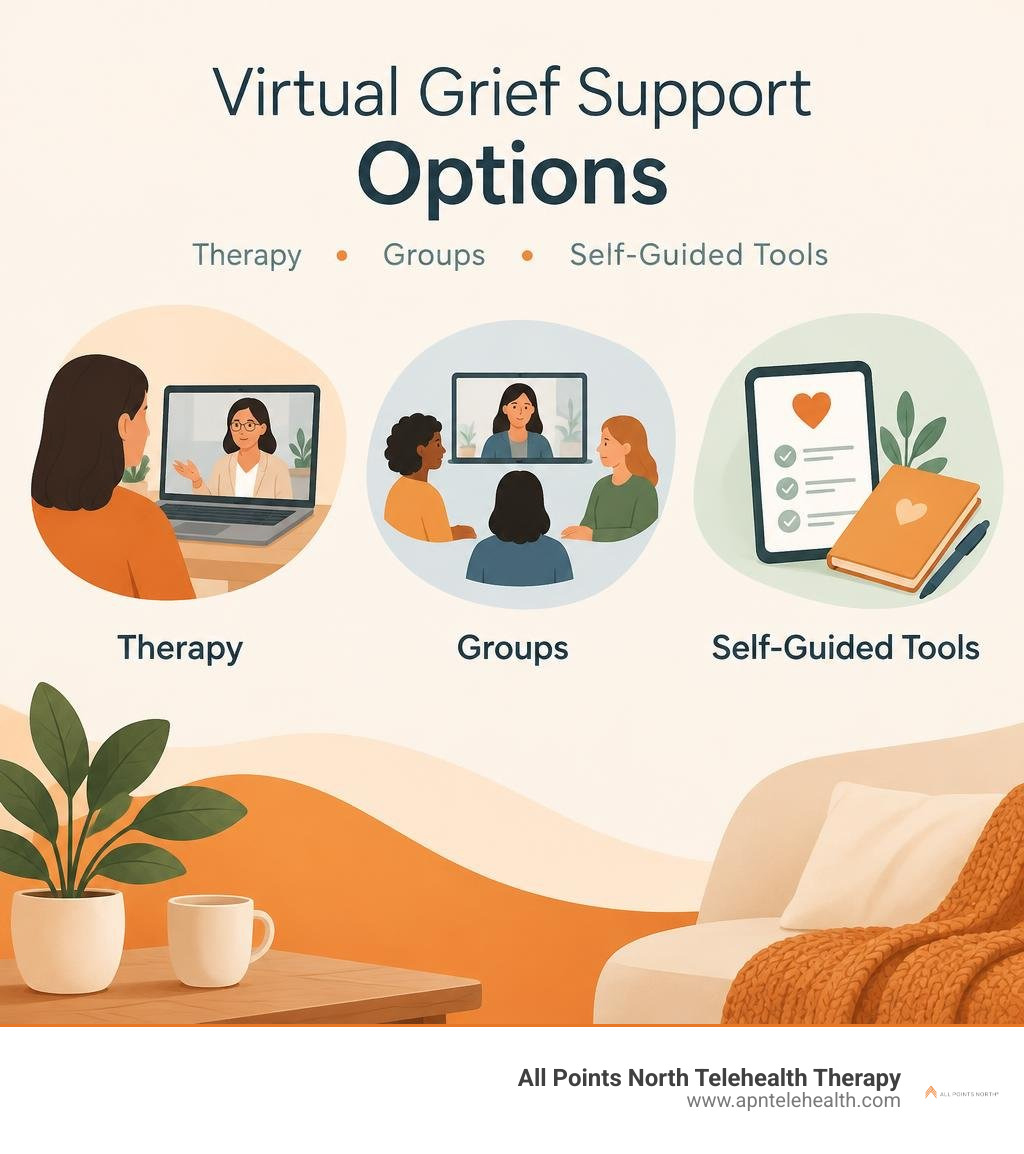
Understanding Online Grief Counseling and How It Works
Grief does not follow a tidy schedule. It shows up late at night, during work meetings, or in the quiet moments between daily tasks. Remote bereavement therapy delivers professional clinical support directly to your living space, removing the friction of traveling to a clinic while you are emotionally exhausted.
Through secure video sessions, phone check-ins, and digital therapeutic exercises, you connect with a dedicated clinician who understands the psychological weight of bereavement. Far from being an impersonal digital exchange, telehealth establishes a robust therapeutic alliance—the trusting bond between client and practitioner that serves as the foundation of emotional healing.
While the core therapeutic goals remain identical to traditional in-person therapy, virtual bereavement care introduces distinct logistical differences:
- Location and Environment: You attend sessions from your own safe environment, surrounded by personal comforts, rather than navigating traffic or sitting in a clinical waiting room.
- Access to Specialists: Telehealth eliminates geographic barriers, allowing you to connect with specialized bereavement clinicians across your state rather than settling for generalists nearby.
- Scheduling Adaptability: Virtual appointments offer flexible scheduling slots that accommodate erratic energy levels, caregiving duties, and unpredictable work hours.
- Continuity of Care: If you travel or experience mobility limitations during periods of acute fatigue, your care continues uninterrupted.
- Data Protection and Privacy: Professional telehealth platforms use dedicated HIPAA-compliant video technology with end-to-end encryption to protect your medical records and conversation details.
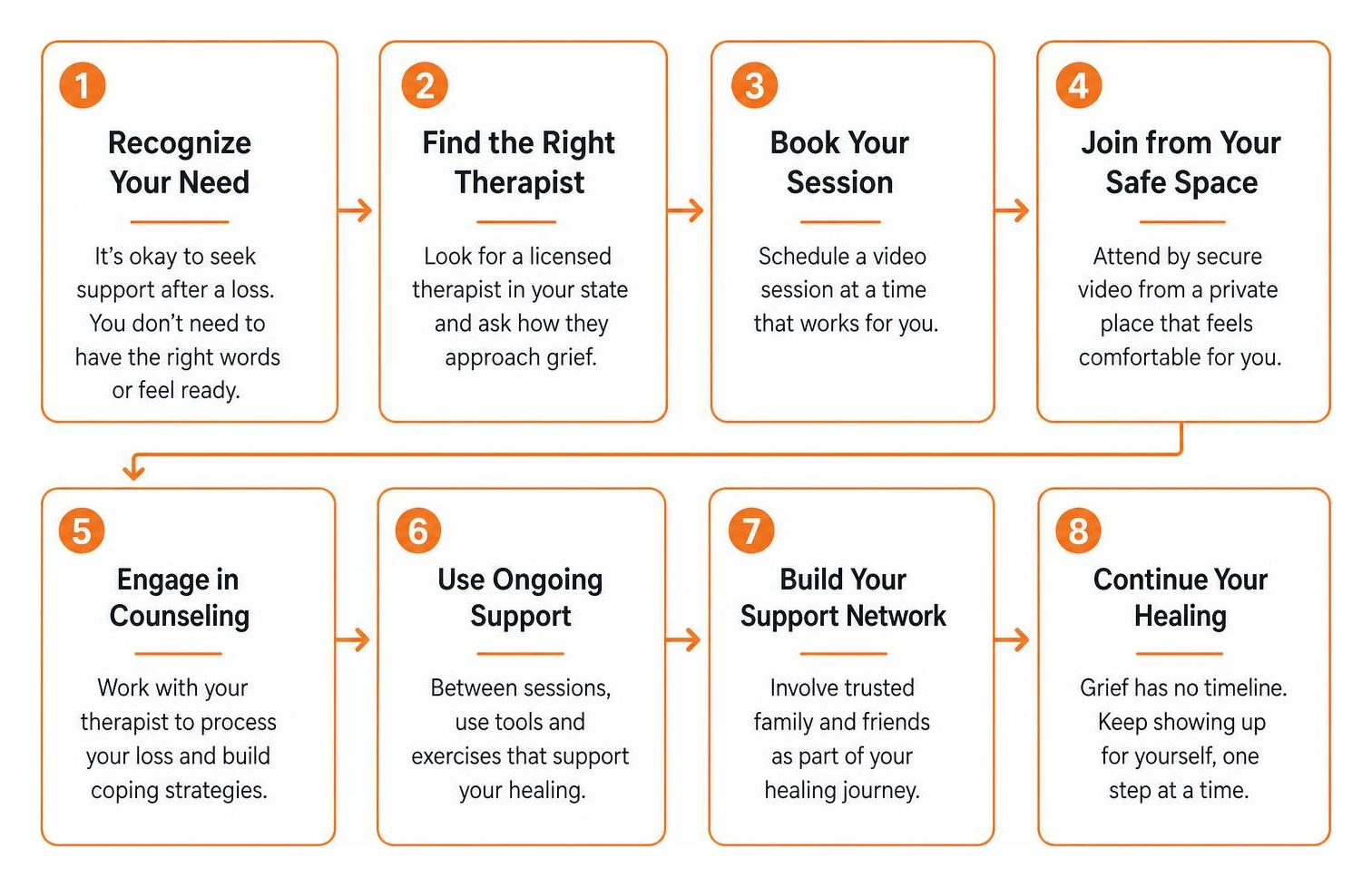
Types of Online Grief Counseling: Individual and Family Teletherapy
Bereavement impacts everyone differently. Some individuals need focused, one-on-one attention to process personal trauma or unspoken guilt, while entire family units often require structured mediation to navigate collective loss.
Clinical telehealth services provide various formats tailored to your emotional circumstances:
| Therapy Format | Primary Focus | Best Suited For | Key Clinical Benefit |
|---|---|---|---|
| Individual Teletherapy | Personal processing of loss, trauma, guilt, and emotional regulation | Individuals experiencing acute grief, isolation, or personal depression | Tailored, private exploration of unique grief triggers and coping mechanisms |
| Family Teletherapy | Relational dynamics, shared bereavement, and communication repair | Families struggling with role changes, misaligned mourning styles, or conflict | Coordinated healing that prevents emotional alienation among relatives |
When processing deep personal heartache, engaging in individual therapy allows you to examine private aspects of your bereavement without filtering your emotions for the benefit of others.
When Virtual Care Connects Loved Ones
When a family loses a cornerstone member—such as a parent, child, or sibling—the entire family dynamic shifts. Grieving styles frequently clash; one person may withdraw into silence, while another focuses relentlessly on practical tasks, inadvertently sparking tension.
Participating in structured family therapy bridges these gaps. Virtual sessions allow family members across different cities or time zones to gather in a shared therapeutic room. Clinicians help identify misunderstandings, validate differing mourning paces, and build sustainable support systems within the home environment.
Key Benefits and Drawbacks of Remote Bereavement Support

Choosing remote care comes with unique advantages and practical considerations.
Core Benefits
- Radical Accessibility: Eliminates travel time, parking costs, and the physical strain of leaving the house when grief drains your physical energy.
- Emotional Safety: You can cry openly, hold a comforting personal item, or have your pet beside you during difficult breakthroughs.
- Rapid Continuity: Seamlessly integrate appointments into your weekly routine without taking full days off work.
Potential Limitations
- Nonverbal Limitations: While high-definition video captures facial expressions, subtle physical body language can occasionally be obscured by camera angles.
- Technological Dependence: Poor internet connections or software updates can interrupt the flow of an emotional session.
- Crisis Constraints: Purely outpatient telehealth is not designed for acute psychiatric emergencies where immediate physical intervention is necessary.
Is Online Grief Counseling Effective for Complicated Loss?
Clinical research demonstrates that remote grief counseling produces outcomes comparable to traditional in-person interventions. Evidence-based telehealth effectively reduces symptoms of prolonged grief disorder, acute shock, and post-loss depression.
Virtual therapy is especially effective for disenfranchised grief—loss that society often overlooks or minimizes, such as pet loss, early pregnancy termination, estranged family dynamics, or the death of an online friend. Clinicians apply modern frameworks like continuing bonds theory, helping you integrate the memory of your loved one into your ongoing life rather than forcing an artificial sense of "closure."
Modalities and Evidence-Based Tools in Virtual Grief Care
Licensed telehealth clinicians use structured, evidence-based modalities adapted for virtual delivery:
- Cognitive Behavioral Therapy (CBT): Identifies maladaptive thought loops, such as survivor guilt or catastrophic thinking, and reframes them with self-compassion.
- Acceptance and Commitment Therapy (ACT): Encourages emotional acceptance of painful feelings while helping you commit to actions aligned with your core values.
- Mindfulness-Based Grief Practices: Regulates the autonomic nervous system through breathwork, helping calm the physiological fight-or-flight response triggered by bereavement.
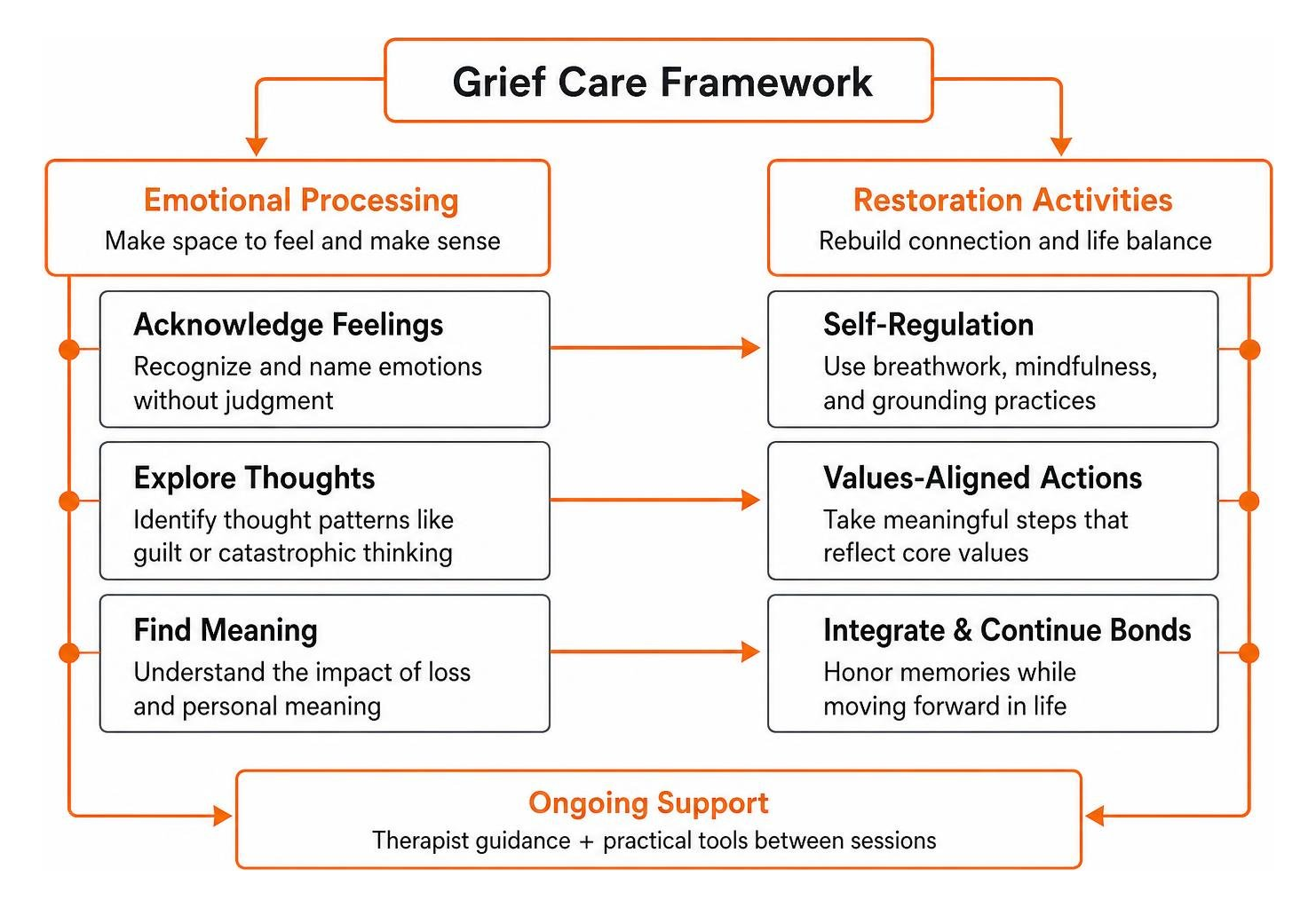
Clinicians integrate practical self-regulation resources into your digital care plan, including guided audio meditations, structured journaling prompts, and somatic grounding routines that you can practice between sessions.
Navigating Acute Bereavement vs. Chronic Grieving

In the initial days following a loss, acute bereavement often brings cognitive fog, emotional numbness, and physical exhaustion. During this phase, therapy focuses on emotional containment, nervous system stabilization, and basic daily functioning.
As months pass, chronic or unresolved grief can emerge through sudden anniversary reactions, holiday distress, or avoidance behaviors. Virtual therapy provides ongoing roadmaps for navigating these emotional milestones, helping you build practical coping strategies long before difficult calendar dates arrive.
How to Choose the Right Support System for Your Healing Journey
Selecting the right care provider is essential to your recovery. When evaluating options, consider the following standards:
- Verify Clinical Credentials: Ensure your provider is a licensed master’s-level or doctoral-level mental health professional (such as an LPC, LCSW, LMFT, or PsyD) with specific experience in bereavement care.
- Review Privacy Standards: Confirm that the platform is fully HIPAA-compliant and uses secure, encrypted video software rather than standard public video apps.
- Assess Care Coordination: Choose services that provide clear escalation pathways to higher levels of care if your grief intersects with clinical depression, trauma, or substance use.
- Transparent Pricing and Insurance: Seek clear information regarding out-of-pocket costs, superbills, or in-network insurance coverage before starting.
To learn more about therapeutic approaches and mental health strategies, explore our blog for clinical insights and practical guides.
Frequently Asked Questions About Grief Support
For additional details on how our clinical programs operate, review our comprehensive frequently asked questions.
Can virtual counseling help if my loss happened years ago?
Yes. Grief does not operate on an expiration date. Delayed or unresolved grief can resurface years later following major life transitions, subsequent losses, or periods of high stress. Virtual counseling helps you safely unpack past losses, address lingering emotional stagnation, and integrate those experiences into your present life.
Is online support suitable for someone experiencing severe crisis?
Outpatient teletherapy is designed for stable individuals seeking emotional and psychological support. If you or someone you know is experiencing severe psychiatric distress, active suicidal ideation, or self-harm, immediate emergency intervention is required. Contact the 988 Suicide & Crisis Lifeline by calling or texting 988, call 911, or go to the nearest emergency room.
How do online platforms protect patient privacy during sessions?
Professional mental health providers use secure, HIPAA-compliant telehealth portals equipped with end-to-end encryption. Session data, clinical notes, and personal medical records are kept confidential and stored within secure, protected health record systems.
Conclusion
Healing from a profound loss does not mean forgetting; it means learning how to carry the memory of your loved one while rebuilding meaning in your life. With structured clinical care, evidence-based practices, and compassionate support, you do not have to carry the weight of bereavement alone.
At All Points North Telehealth Therapy, our licensed clinicians provide personalized, outcome-tracked care tailored to your unique healing journey. When you are ready to take the next step toward sustainable emotional health, connect with our team through All Points North to schedule your virtual consultation.