Secure Your Virtual Practice with Fully Compliant Telehealth Tools
Legal and Regulatory Foundations for HIPAA Compliant Video Therapy
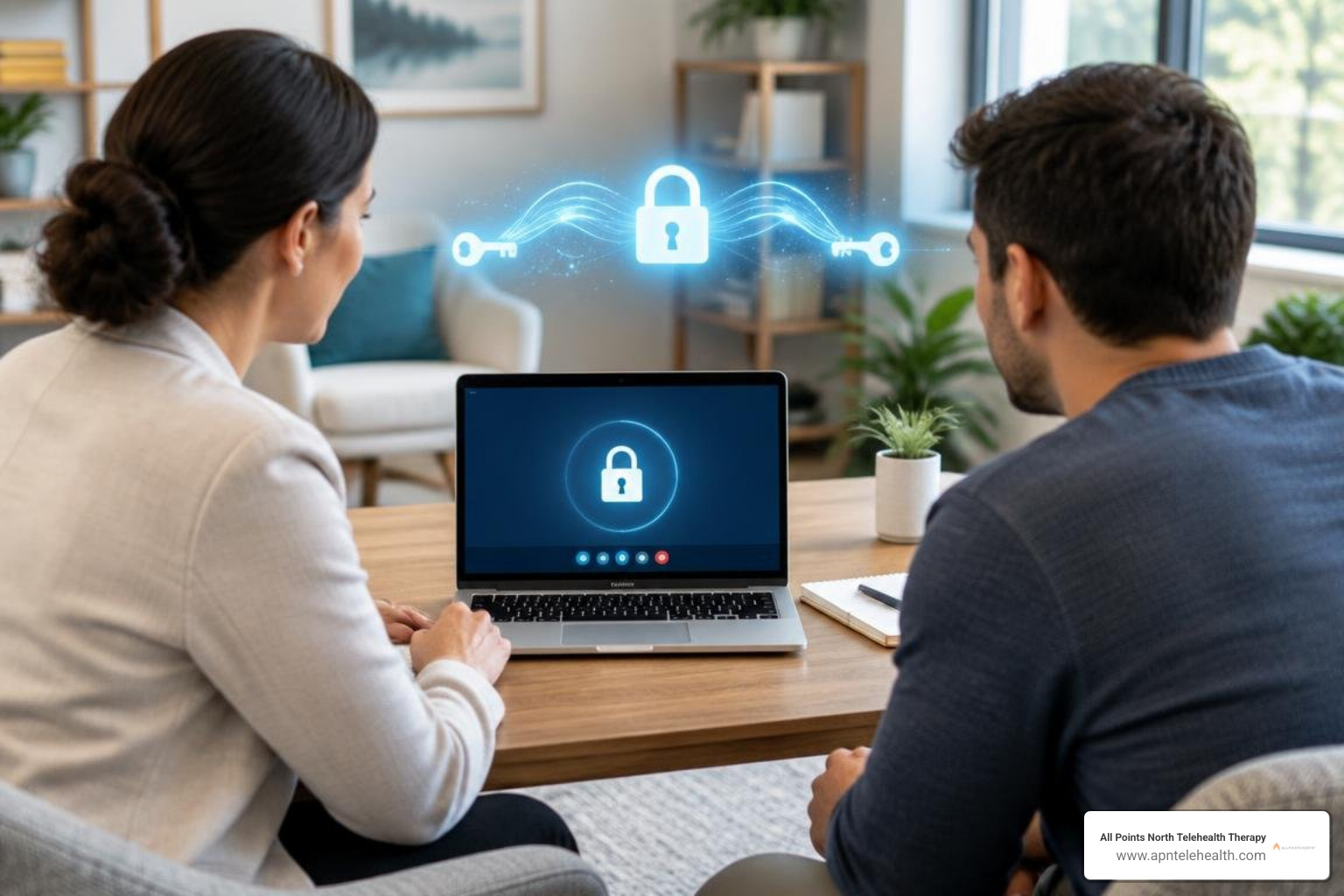
HIPAA compliant video therapy requires encrypted real-time media using DTLS-SRTP with AES-256, signed Business Associate Agreements with every vendor that handles electronic protected health information, role-based access controls and token-gated session entry, and isolated workflows for psychotherapy notes and crisis response. These safeguards rest on the Health Insurance Portability and Accountability Act (HIPAA) Privacy Rule and Security Rule, which define baseline national standards for protecting individuals' medical records and personal health information (PHI). In digital healthcare environments, these rules demand strict administrative, physical, and technical safeguards.
Every vendor handling electronic protected health information (ePHI)—from video routing infrastructure to cloud storage—must execute a legally binding Business Associate Agreement (BAA). A BAA establishes mutual accountability, ensuring third-party providers implement required data safeguards and report security incidents promptly. Beyond federal mandates, clinicians must also navigate state licensing laws and cross-state practice regulations to ensure care remains lawful across jurisdictional borders.
Stricter Protections for Psychotherapy Notes and 42 CFR Part 2
Mental healthcare involves uniquely sensitive clinical data that demands protection beyond general medical records. Under HIPAA (45 CFR 164.524), psychotherapy notes receive a distinct legal classification. These process notes, documented by a mental health professional to analyze session conversations separately from the rest of the medical chart, cannot be released under standard medical record requests without explicit, separate patient authorization.
When treating substance use disorders (SUD), federal regulations under 42 CFR Part 2 enforce even stricter confidentiality measures. This framework predates HIPAA and prevents any unauthorized disclosure or re-disclosure of patient identities and treatment records in legal, criminal, or administrative proceedings. Modern clinical tools must uphold these standards by separating psychotherapy notes from general charts and securing patient data as outlined in our telehealth privacy policy standards.
Mandatory Reporting and Parallel Crisis Management Workflows
Teletherapy platforms must account for clinical emergencies and statutory mandatory reporting obligations (such as imminent self-harm, harm to others, or child and elder abuse). When a patient experiences acute distress during a remote session, clinicians require fast, silent emergency escalation paths that do not disrupt the live video feed.

High-grade telehealth architectures implement isolated Publish/Subscribe (PubSub) messaging channels to trigger automated, parallel crisis workflows. If a clinician flags a crisis event (such as publishing a CRISIS_ALERT message), backend systems can immediately notify on-call clinical supervisors, verify the patient's physical location, and stage emergency service contact details. Telehealth interfaces should also permanently display emergency contacts, such as the 988 Suicide & Crisis Lifeline, ensuring critical support remains accessible even if a network interruption occurs.
Core Technical Architecture: Encryption, Storage, and Infrastructure Security
A reliable teletherapy infrastructure requires end-to-end security across every communication channel. Real-time video and audio streams must be protected using Secure Real-time Transport Protocol (SRTP) over Datagram Transport Layer Security (DTLS) handshakes. This configuration enforces robust AES-256 bit encryption on all media packets traveling across public networks.
To minimize security risks, the underlying cloud infrastructure should maintain SOC2 Type 2 compliance verified by independent auditors. Following established HIPAA workspace security configurations, video platforms should not store live video, audio, or screen-sharing data on transit servers. Ephemeral memory handles real-time packet switching, ensuring sensitive data is not written to unencrypted disks.
Implementing End-to-End Encryption in HIPAA Compliant Video Therapy
True End-to-End Encryption (E2EE) ensures that only the clinician and the patient hold the cryptographic keys needed to decrypt audio and video streams. Intermediate media routing servers (Selective Forwarding Units, or SFUs) process only encrypted data packets, preventing external parties or infrastructure providers from intercepting sessions.
Implementing robust E2EE involves generating a secure client-side encryption key and distributing it across a separate, encrypted HTTPS channel before participants join the call. When evaluating a mental health video consultation app architecture, development teams often utilize a dual-mode system:
- Pure E2EE Mode: Used for standard, high-privacy psychotherapy sessions. Media streams remain entirely inaccessible to cloud servers, and server-side cloud recording is completely disabled.
- Encrypted Storage Mode: Applied when session recording is clinically necessary and explicitly authorized by the patient. Media streams use server-side AES-256 encryption in transit and at rest within private storage environments.
Secure Webhooks, Storage Buckets, and Business Associate Agreements
When telehealth platforms connect with external services for scheduling, automated recordkeeping, or session management, all webhooks must be secured. Infrastructure endpoints should enforce HTTPS, verify incoming payloads using HMAC signatures, and whitelist verified IP addresses to block unauthorized requests. To safeguard user identity, identifiers and room names should be obfuscated using cryptographic hashing algorithms like SHA-256.
| Architectural Dimension | End-to-End Encrypted (E2EE) Sessions | Server-Side Encrypted Recorded Sessions |
|---|---|---|
| Decryption Point | Client browser/device only | SFU Server Memory & Storage Ingestion |
| Server PHI Exposure | Zero (Zero-Knowledge Architecture) | Ephemeral processing during recording ingestion |
| Cloud Recording | Architecturally unavailable | Enabled via customer-controlled S3 buckets |
| BAA Requirement | Mandatory for all infrastructure layers | Mandatory for media and storage services |
| Data Retention | No media retained on servers | Retained per practice lifecycle policies |
| Best Clinical Fit | Standard psychotherapy, trauma, SUD care | Psychoeducation, clinical training, consultations |
When session recordings or clinical artifacts are stored, they must be uploaded directly to private, customer-managed cloud buckets (such as encrypted Amazon S3) and removed immediately from third-party media servers. Applying strict automated lifecycle policies guarantees that files are permanently deleted once legal retention windows expire.
Session Management, Consent Protocols, and Patient Experience
A seamless patient experience relies on transparent, secure session onboarding. Virtual care environments must enforce role-based access controls (RBAC) and explicit authentication steps before granting entry to video rooms. Isolating session links prevents unauthorized participants from joining calls and ensures care adheres to established clinical terms and conditions.
Token-Gated Waiting Rooms and Multi-Layered Patient Consent
Virtual waiting rooms prevent unexpected interruptions and safeguard patient privacy. Token-based entry controls (such as ask_join permissions) keep patients in a private digital lobby until the clinician verifies their identity and manually admits them.
During the waiting room check-in, patients complete a multi-layered digital consent workflow:
- General Telehealth Consent: Acknowledging the nature, risks, and clinical limitations of remote care.
- Identity Verification: Confirming the patient's identity and documenting their current physical location for emergency protocols.
- Data Handling & Recording Consent: Collecting explicit, granular permissions for any recording, transcription, or technical logging features.
Recording Rules, AI Summaries, and Transcription Governance in HIPAA Compliant Video Therapy
Recording a behavioral health session should never occur without clear clinical purpose and explicit, signed patient authorization. In platforms supporting HIPAA compliant video therapy, session recording should remain disabled by default.

When integrating automated transcription or AI-assisted clinical documentation tools, technical and legal safeguards must be enforced:
- Zero Model Training: Service level agreements must guarantee that no clinical audio, transcripts, or summaries are used to train foundational AI models.
- Strict Ephemeral Buffering: Any intermediate processing files generated during transcription must be purged within strict timeframes (such as immediate deletion or a maximum 14-day staging window).
- Isolated PHI Storage: Post-session summaries should be transferred directly into the secure Electronic Health Record (EHR) and deleted from temporary media pipelines.
Essential Clinical Features and Common Implementation Pitfalls
A secure clinical platform must pair robust compliance with intuitive everyday functionality. When building or evaluating comprehensive telehealth care packages, technical tools should enhance the therapeutic alliance without introducing privacy vulnerabilities or distracting from care.
AI Noise Suppression, Screen Sharing, and In-Session Messaging
Virtual therapy sessions frequently take place in real-world environments with unpredictable background noise. Clinician-grade platforms benefit from integrated features designed for therapy:
- AI Noise Suppression: On-device neural audio processors isolate human speech and filter out distracting sounds—like street traffic or home appliances—without transmitting unencrypted audio to third-party filtering servers.
- Clinical Screen Sharing: Patients and clinicians can review psychological assessments, worksheets, or psychoeducational materials in real time via secure, encrypted peer-to-peer data streams.
- Ephemeral In-Session Chat: Built-in messaging allows clients to share relevant text or links during session. To protect privacy, chat logs should be purged immediately upon call termination rather than saved to unencrypted databases.
Technical Pitfalls and Compliance Pitfall Mitigation
Building compliant telehealth tools comes with technical challenges. Understanding common failure points helps organizations secure their systems effectively:
- Pitfall: Unmasked PHI in System Logs. Logging raw usernames, email addresses, or unmasked patient IP addresses inside server records creates an unintentional ePHI trail.
Mitigation: Hash participant identifiers using SHA-256 and mask client IP addresses before recording operational logs. - Pitfall: Unverified Third-Party Integrations. Using external analytics, performance tracking, or transcription plugins without an executed BAA violates HIPAA rules.
Mitigation: Audit every SDK dependency, disable non-essential client tracking scripts, and ensure active BAAs are in place for all sub-processors. - Pitfall: Permissive Default Configurations. Leaving recording, public joining, or open screen sharing enabled by default increases the risk of privacy breaches.
Mitigation: Enforce zero-trust configurations where recording and open permissions are disabled until authenticated users grant explicit approval.
Frequently Asked Questions About Secure Telehealth Systems
For more information on remote clinical protocols, visit our frequently asked telehealth questions page.
Should psychotherapy sessions ever be recorded during video therapy?
Recording psychotherapy sessions is generally discouraged unless required for specific clinical training, supervision, or objective diagnostic reviews. HIPAA classifies psychotherapy notes separately, and recording sessions creates a permanent audiovisual record of sensitive disclosures. For substance use disorder programs subject to 42 CFR Part 2, recordings introduce complex legal disclosure risks. When a recording is clinically necessary, providers must secure signed, informed patient consent, use dedicated server-side encryption, and apply strict data-retention schedules.
How does E2EE impact automated transcription and cloud recording?
End-to-End Encryption and server-side cloud processing are mutually exclusive. Because E2EE decrypts media streams exclusively on the participating client devices, intermediate cloud servers cannot interpret the audio feed to generate cloud recordings or server-side AI transcripts. To utilize automated documentation tools, platforms must use client-side processing models or operate in a dedicated, server-side encrypted mode protected by comprehensive BAAs and customer-managed storage buckets.
What steps verify that a video infrastructure vendor is truly HIPAA compliant?
To confirm a vendor's compliance claims, complete the following due diligence steps:
- Execute a BAA: Secure a signed Business Associate Agreement covering all relevant media transport and signaling services.
- Review Audit Reports: Request current SOC2 Type 2 compliance documentation and third-party security audit summaries.
- Confirm Zero-Retention Policies: Verify that media streams, transient chat logs, and unencrypted files are not retained on vendor servers.
- Audit Webhooks and APIs: Ensure external integrations enforce HMAC signatures, token authentication, and data encryption for all outbound requests.
Conclusion
Securing a modern virtual practice requires a strong foundation of administrative policies, legal frameworks, and technical safeguards. Delivering private, effective teletherapy demands more than standard video calling; it requires an infrastructure designed to protect sensitive patient disclosures across every touchpoint.
At All Points North Telehealth Therapy, we provide evidence-based, outcome-tracked virtual care led by licensed master's and doctoral-level clinicians. Our specialized individual teletherapy services deliver personalized, coordinated mental health support backed by comprehensive clinical oversight and seamless access to our broader continuum of care.