Online Family Counseling Is Changing How Modern Families Heal Together
How Online Family Counseling Helps Families Work Through Conflict

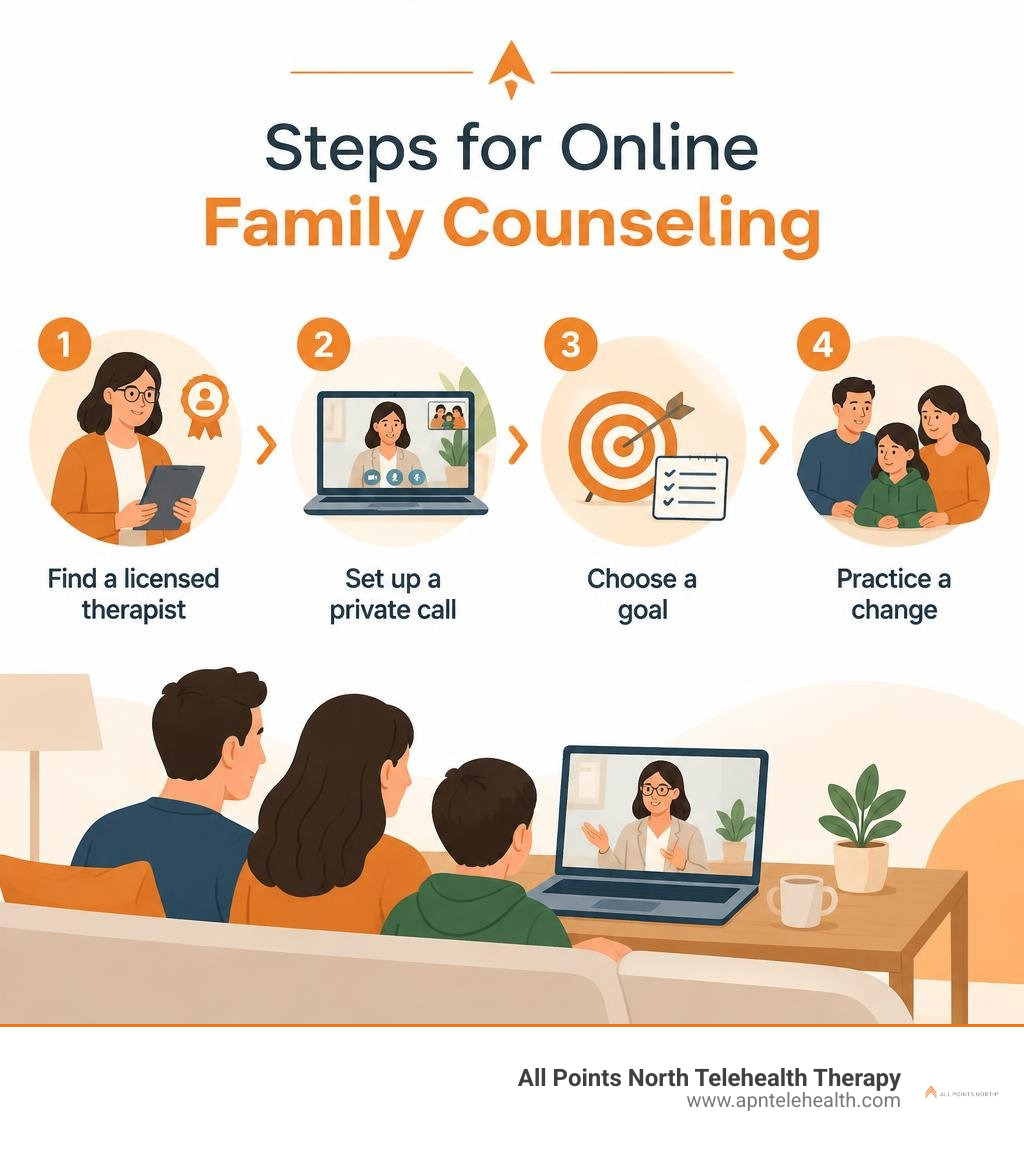
To work through a family conflict online, start with a therapist licensed to see everyone in their location. Set up a private video call, name one issue you want to address, and let the therapist help each person speak and listen without interruption. You do not need to solve everything in one session. A useful first goal is to understand the pattern behind the conflict and agree on one change to try at home.
Online sessions can make it easier to bring busy or separately housed family members together. This guide covers how to get started, what to expect, and when in-person support may be a better fit.
Understanding Online Family Counseling and How It Works
Family life is messy, beautiful, and occasionally chaotic. When communication breaks down, resolving deep-seated tensions while juggling school drop-offs, work deadlines, and extracurricular schedules can feel impossible.
Online family counseling bridges this gap by delivering evidence-based relational therapy directly into your living room via secure video conferencing. Rather than requiring everyone to commute to a physical clinic, a licensed clinician meets your household virtually, creating a neutral space where every voice can be heard.
Modern systemic therapy focuses not just on individual symptoms, but on the relational dynamics, behavioral feedback loops, and communication habits that shape household interactions. During virtual sessions, our licensed clinicians observe these dynamics in real time, helping families deconstruct unhelpful habits and build collaborative problem-solving strategies.
| Format / Setup | Household Configuration | Key Clinical Benefit | Best Suited For |
|---|---|---|---|
| Single-Device Family Sessions | Entire household joins from one room | Captures shared room dynamics and immediate interactions | Families living under one roof |
| Multi-Location Video Sessions | Participants join from separate devices | Connects members across distances without travel barriers | Split households, co-parents, college students |
| Combined Individual & Family Telehealth | Family meetings paired with 1-on-1 sessions | Gives individuals space to process alongside group work | Complex relational cycles, de-escalation |
| Focused Virtual Check-Ins | Targeted follow-up video sessions | Reinforces behavioral shifts and accountability | Ongoing maintenance, busy routines |
When tailored interventions are needed, exploring specialized family therapy allows households to focus on systemic healing and rebuild strained connections with structured clinical guidance.
Virtual Sessions and Household Access
One distinct advantage of virtual sessions is the ability to break down geographical and structural barriers. For modern families, living under one roof is no longer the only standard:
- Blended families can coordinate schedules between multiple households.
- Divorced or co-parenting partners can attend sessions without the friction of sharing physical waiting rooms.
- Parents with young adults in college or traveling spouses can log in simultaneously from different cities or states.
Meeting remotely also provides therapists with a window into your family’s real-world environment. In an office, children and adults often put on their "best behavior." At home, natural behavioral patterns surface faster, allowing clinicians to offer practical, contextual feedback that fits your daily routine.
Clinical Efficacy and Treatment Outcomes
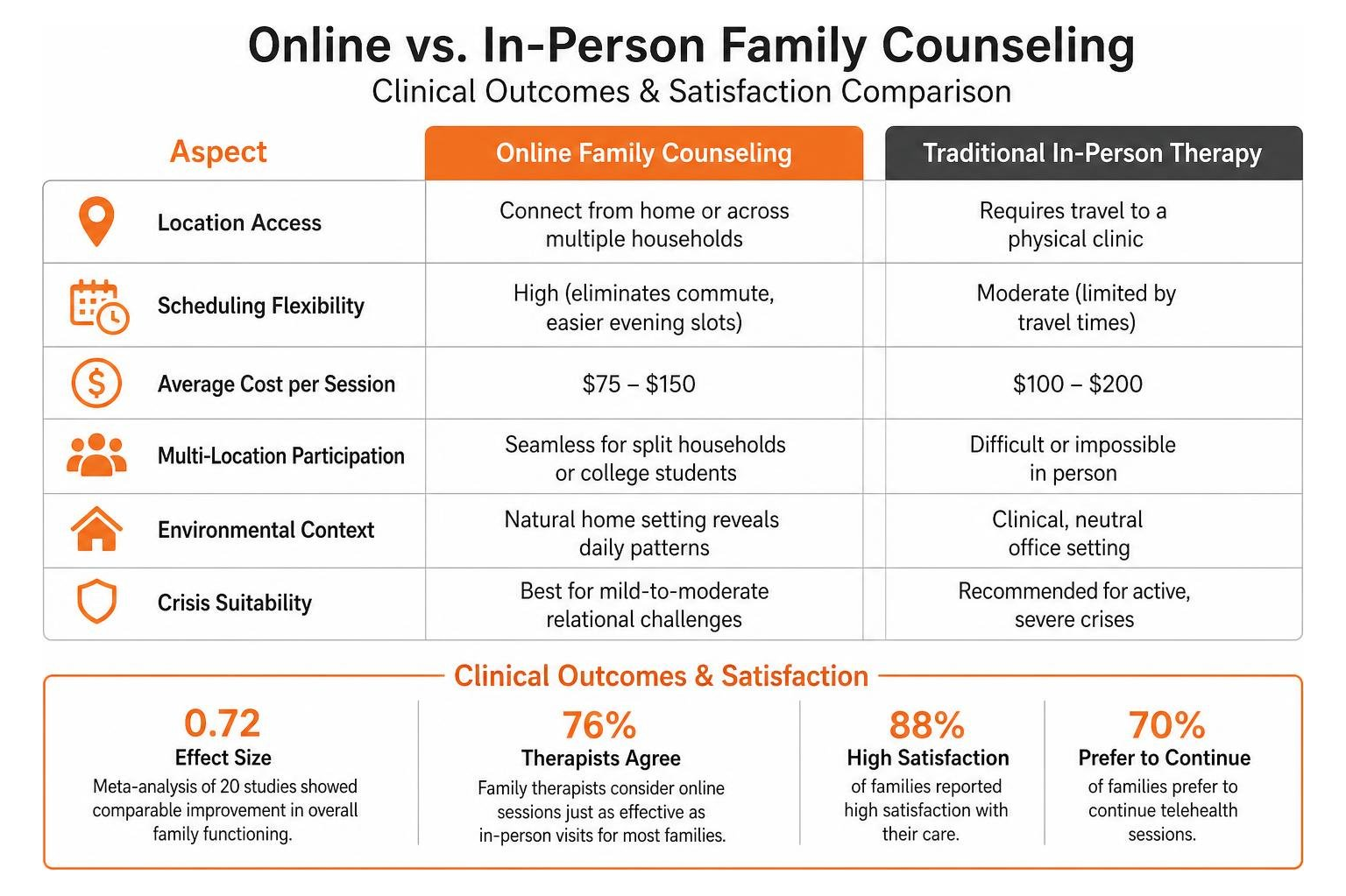
Families often ask whether virtual care produces the same long-term results as sitting on an office sofa. The data is clear: teletherapy is just as effective as traditional care.
Research demonstrates that virtual interventions provide substantial relational benefits. A 2020 meta-analysis of 20 studies examining systemic virtual care revealed a 0.72 effect size on improving overall family functioning, demonstrating outcomes fully comparable to face-to-face therapy. According to scientific research on family teletherapy outcomes, remote systemic interventions can produce meaningful improvements in family communication and conflict resolution.
Furthermore, surveys show that 76% of family therapists consider online sessions just as effective as in-person visits for most family units. In a study evaluating remote therapy adoption, 88% of participating families reported high satisfaction with their care, and 70% expressed a clear preference to continue telehealth sessions over returning to an office.
Key Benefits of Teletherapy for Modern Households
Teletherapy removes the friction that often delays families from seeking help. Modern households face immense time pressure, and eliminating the logistics of office visits makes consistent support accessible. In some cases, pairing family sessions with targeted individual therapy options ensures that each family member has personal space to process emotions alongside group discussions.
Scheduling Flexibility and Reduced Logistical Stress
Coordinating the calendars of two working parents, an active teenager, and a younger sibling is a massive logistical challenge. In a survey of 1,200 families, 65% reported that virtual counseling significantly reduced scheduling conflicts and directly increased session attendance.
Telehealth eliminates the physical commute entirely. You no longer have to navigate rush-hour traffic or arrange paid childcare for younger siblings just to attend an hour-long session. With sessions averaging $75 to $150 compared to the $100 to $200 common for in-person appointments, virtual care also provides a more sustainable financial path for long-term treatment.
Comfort and Emotional Safety in the Home Environment
Therapy requires vulnerability, and vulnerable conversations are naturally easier in familiar surroundings. Being in a comfortable home environment helps lower baseline anxiety, particularly for children and teenagers who might find a clinical office intimidating.

When family members feel physically secure on their own couch, emotional regulation improves. Therapists can guide parents and children through active de-escalation techniques directly in the spaces where arguments normally occur, anchoring new communication habits into the physical home environment.
Step-by-Step Guide to Resolving Conflicts via Teletherapy
Resolving entrenched conflicts requires a structured approach. When we guide families through virtual conflict resolution, we rely on a clear four-step process:
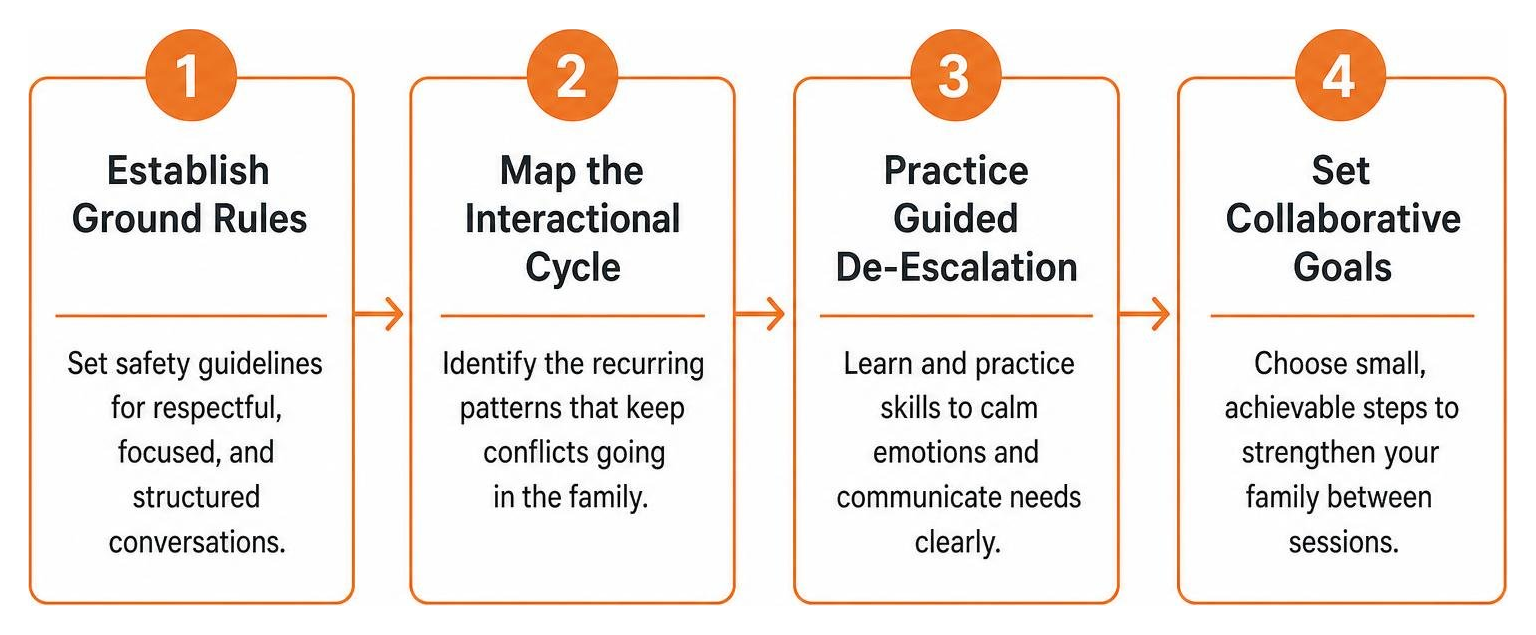
- Establish Ground Rules: The therapist establishes safety guidelines—no talking over one another, no multi-tasking on devices, and taking structured pauses when emotions spike.
- Map the Interactional Cycle: Instead of blaming one individual, the family works with the therapist to identify the recurring loop (e.g., Parent demands to Teen shuts down to Parent escalates).
- Practice Guided De-Escalation: When conversations get heated, the clinician intervenes immediately to model emotional regulation and rephrase defensive statements into clear, vulnerable needs.
- Set Collaborative Goals: The family identifies one small, achievable behavioral shift to practice between sessions.
Essential Technology and Session Setup
A smooth, secure teletherapy experience requires minor preparation before your appointment begins.

- Internet & Device: Use a stable high-speed internet connection (minimum 10 Mbps). A laptop, desktop, or tablet placed on a steady surface is preferable to a handheld phone.
- Camera Placement: Ensure the camera is positioned at eye level and wide enough to capture all participating family members in the room.
- Audio & Privacy: If family members are connecting from different rooms within the same house, ensure each person uses private headphones to prevent audio feedback and protect privacy.
- Distraction Management: Silence phones, turn off televisions, and place a "Do Not Disturb" sign on the door to maintain clinical focus.
What to Expect During Initial Online Family Counseling Sessions
Your first 1 to 2 sessions focus on discovery and systemic assessment. The therapist will conduct an intake to understand each member's perspective on the household dynamics.
During these initial meetings, you will outline family history, identify major stressors, and define shared goals. The therapist will evaluate how boundaries, power dynamics, and emotional responses operate within the family system, creating a collaborative roadmap for future sessions.
Overcoming Limitations and Finding the Right Therapist
While teletherapy offers remarkable accessibility, it is not universally appropriate for every clinical scenario. Understanding clinical boundaries helps you make informed choices for your family's safety. For deeper discussions on clinical care trends and family wellness, our mental health insights blog provides regular resources and guidance.
When is online counseling not appropriate?
- Severe, active substance use disorders requiring medical detox or intensive onsite monitoring.
- Immediate risk of self-harm or active suicidal ideation requiring emergency crisis containment.
- Ongoing domestic violence or severe coercive control, where participating safely from home is compromised.
Evaluating Therapist Credentials and Specializations
Choosing a qualified clinician ensures your family receives evidence-based, ethically sound care. When selecting a therapist, verify the following:
- State Licensure: The therapist must hold an active license (LMFT, LCSW, LPC, PsyD, or PhD) in the state where the clients are physically located during the call.
- Systemic Training: Look for clinicians specifically trained in relational modalities, such as Emotionally Focused Family Therapy (EFFT) or Structural Family Therapy, rather than generalists who only treat individuals.
- Telehealth Competence: Ensure the clinician utilizes HIPAA-compliant video platforms and has formal experience managing multi-party virtual dynamics.
Questions to Ask Before Starting Online Family Counseling
Before committing to a provider, ask these practical questions during your initial consultation:
- What specific experience do you have managing multi-person family sessions online?
- How do you handle situations where a session becomes emotionally overwhelming or someone storms off camera?
- What is your emergency protocol if a family member experiences a mental health crisis during a virtual session?
- How do you navigate confidentiality when communicating separately with parents versus minor children?
Frequently Asked Questions
How do therapists ensure privacy and confidentiality during virtual sessions?
Clinicians use encrypted, HIPAA-compliant telehealth platforms designed to prevent unauthorized access. Therapists conduct calls from private, soundproof offices to ensure confidentiality. To explore our platform safeguards, visit our answers to common telehealth questions.
What types of family issues are best suited for online counseling?
Virtual counseling is effective for navigating parent-child conflict, communication breakdowns, boundary issues, major life transitions (such as divorce, moving, or new caregiving responsibilities), and establishing healthy co-parenting routines.
How does teletherapy work if family members live in different locations?
Telehealth platforms support multi-party log-ins. Each participant joins via a unique, secure link from their own device, allowing college students, separated parents, or traveling family members to participate alongside those at home.
Conclusion
Resolving long-standing family friction does not require rearranging your entire life to sit in a clinic waiting room. With modern teletherapy, your family can access compassionate, doctoral- and master's-level clinical care directly from the comfort of home.
If you are ready to break unhealthy cycles and build lasting connection, start virtual family counseling today with All Points North Telehealth Therapy and take the first step toward lasting relational healing.