Log Off and Reconnect Using Family-Based Digital Therapy
Understanding the Clinical Efficacy of Family Therapy for Digital Addiction

Compelling data underlines the role of the family unit in addressing digital dependency. When an adolescent or young adult becomes caught in cycles of compulsive gaming, endless social media scrolling, or continuous streaming, the issue rarely exists in complete isolation.
Rigorous research—synthesized in a meta-analysis encompassing 18 distinct studies and 1,158 young participants—demonstrates that family-based interventions achieve significant reductions in internet addiction severity compared to control conditions (SMD = -1.43, 95% CI: -2.19 to -0.67, p = 0.0002) (Wang et al., 2024). For community adolescents without severe co-occurring psychiatric diagnoses, family-centered models showed a profound advantage over non-intervention controls (SMD = -1.93, 95% CI: -3.13 to -0.73, p = 0.002) (Wang et al., 2024). Reviewing the broader scientific evidence on family-based therapy for internet addiction shows that engaging the home environment yields transformative therapeutic leverage.
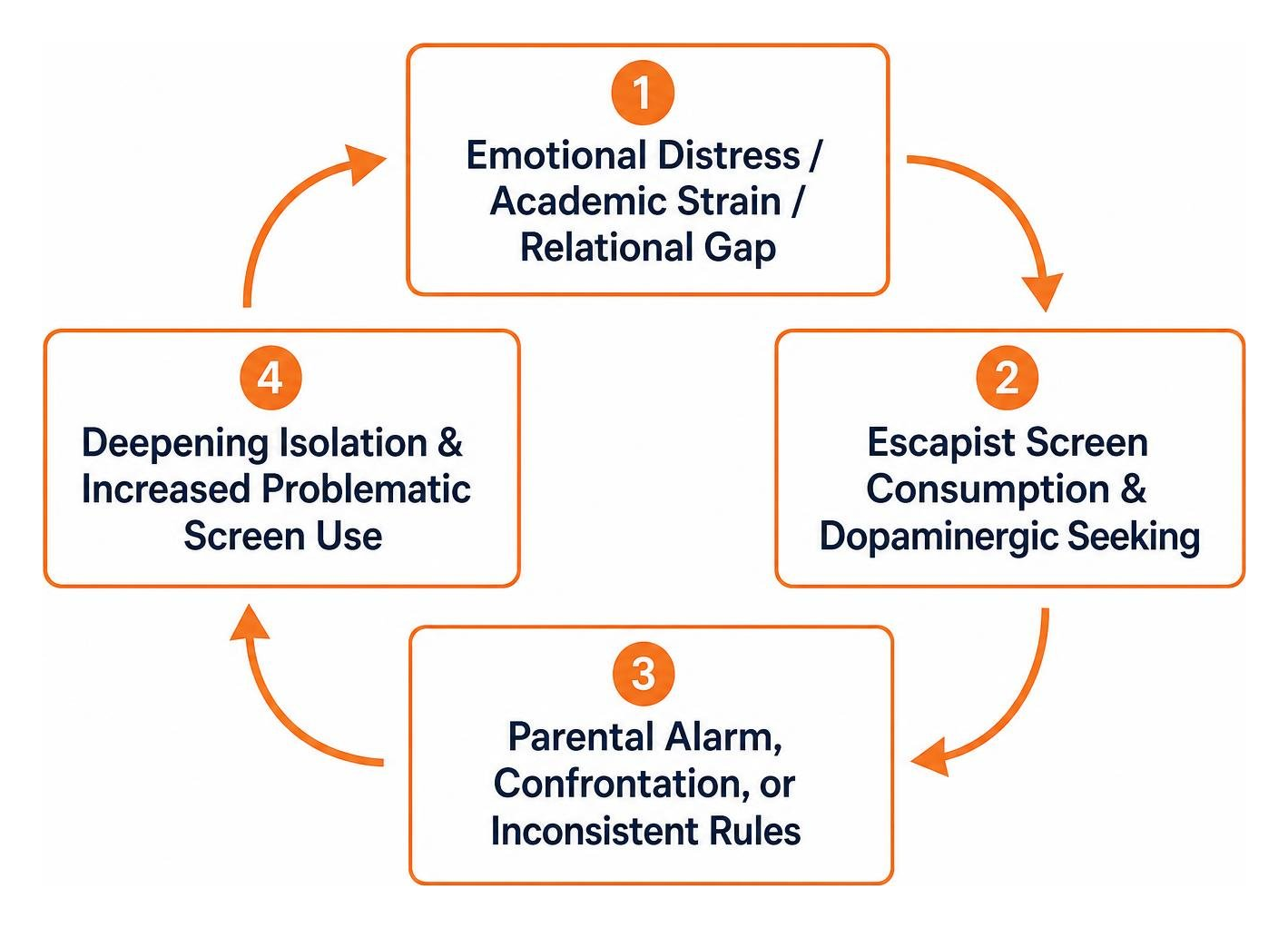
When digital overuse intersects with psychiatric conditions, such as major depressive disorder, severe anxiety, or neurodivergent dysregulation, the therapeutic effect amplifies. In clinical subgroups where family therapy was added to ongoing psychological interventions alongside prescribed medication, the reduction in internet addiction severity was exceptionally pronounced (SMD = -3.75, 95% CI: -5.14 to -2.37, p < 0.001) (Wang et al., 2024). Rather than viewing digital overuse as an isolated behavioral flaw, systemic interventions address the surrounding environment, offering young people the relational stability necessary to disengage from excessive virtual consumption.
Evaluating Short-Term and Long-Term Recovery Outcomes
A primary challenge in behavioral health is ensuring that initial improvements last beyond the end of treatment. Standalone behavioral interventions often achieve quick compliance, only to falter when everyday household stressors return.
Longitudinal evidence shows that family-based interventions support long-term durability. At a 6-month follow-up, family therapy sustained a significant beneficial effect on reducing addiction severity relative to non-intervention controls (SMD = -1.03, 95% CI: -1.56 to -0.49, p < 0.001) (Wang et al., 2024). Rather than relying solely on individual willpower, family interventions shift the daily household culture, reinforcing healthy digital boundaries, offline activities, and shared meals.
Impact on Family Functioning and Adolescent Mental Health
Digital dependency rarely occurs without emotional consequences. Adolescents using screens to self-medicate for emotional distress frequently face underlying mood challenges. Meta-analytic findings indicate that family-based therapies provide broad psychological benefits:
- Overall Family Functioning: Family therapy substantially improves overall family cohesion and adaptability (SMD = -0.84, 95% CI: -1.14 to -0.54, p < 0.001) (Wang et al., 2024).
- Depression Alleviation: Compared to standard alternative interventions, family therapy drives meaningful reductions in depressive symptom severity (SMD = -0.89, 95% CI: -1.68 to -0.09, p = 0.03) (Wang et al., 2024).
- Strengthening Positive Coping Mechanisms: Family-centered interventions help youth build adaptive problem-solving skills (SMD = 1.57, 95% CI: 1.24 to 1.89, p < 0.001) (Wang et al., 2024).
- Extinguishing Negative Coping: These approaches dramatically lower reliance on maladaptive emotional avoidance and escapism (SMD = -8.29, 95% CI: -9.92 to -6.65, p < 0.001) (Wang et al., 2024).
When parents and adolescents develop adaptive communication skills, screen time naturally shifts from an emotional shelter back into a standard tool for learning and connection.
Key Modalities and Systemic Mechanisms in Family Interventions
Systemic family therapy conceptualizes behavioral challenges not as localized internal defects within the youth, but as symptoms shaped by broader relational patterns. Unclear household rules, avoidance behaviors, misaligned expectations, and high-conflict environments often drive adolescents to seek refuge in gaming worlds or online spaces that feel more predictable.
| Therapeutic Dimension | Individual Cognitive-Behavioral Therapy (CBT) | Systemic Family Therapy |
|---|---|---|
| Primary Focus | Individual cognitive distortions and personal trigger tracking | Relational patterns, family communication, and home boundaries |
| Mechanism of Change | Cognitive restructuring and individual behavioral experiments | Improving household communication, clear boundaries, and mutual validation |
| Environmental Context | Operates primarily inside the clinical setting with personal homework | Restructures the living environment directly |
| Relapse Resilience | Relies on individual motivation amid existing home dynamics | Supported by sustainable shifts in family support and expectations |
Integrating MDFT and Family Therapy for Digital Addiction Protocols
Multidimensional Family Therapy (MDFT) represents a structured, evidence-based approach designed to address adolescent behavioral challenges across four integrated domains: the adolescent, the parents, parent-child interactions, and extrafamilial systems (such as schools).
A clinical trial on multidimensional family therapy for problematic gaming highlighted that both MDFT and family therapy as usual (FTAU) reduced DSM-5 Internet Gaming Disorder (IGD) criteria across a 12-month evaluation (Nielsen et al., 2021). Notably, the full MDFT protocol reduced IGD diagnostic rates to 0% at 12 months (compared to 19% in FTAU) and secured complete 100% treatment retention (against 70% in FTAU) (Nielsen et al., 2021). Higher session dosage and addressing the parent-adolescent perception gap—where youth minimize their screen time while parents express high anxiety—are central to lasting recovery (Nielsen et al., 2021).
Combining Modalities for Complex Cases
While systemic family therapy establishes the relational foundation, complex clinical presentations often call for a multi-layered treatment plan. In cases involving high-stakes academic disruption, co-occurring social anxiety, or underlying neurodivergence, we frequently integrate family sessions with tailored individual therapy.
A notable parental counseling and digital training study revealed that over half (55%) of parents enrolling in digital self-learning programs proactively seek professional counseling. Multimodal support channels (video calls, phone check-ins, and direct messaging) yielded high satisfaction (61% very satisfied) while addressing core themes like media consumption insecurity, emotional exhaustion, and autonomy conflicts. Combining parent coaching, individual emotional processing, and joint family sessions creates an effective ecosystem for recovery.
Practical Implementation: From Assessment to Virtual Delivery
Transitioning from clinical insights to practical change requires clear, structured steps. In our clinical practice, we guide families through systematic phases to replace chaotic screen use with healthy household routines.
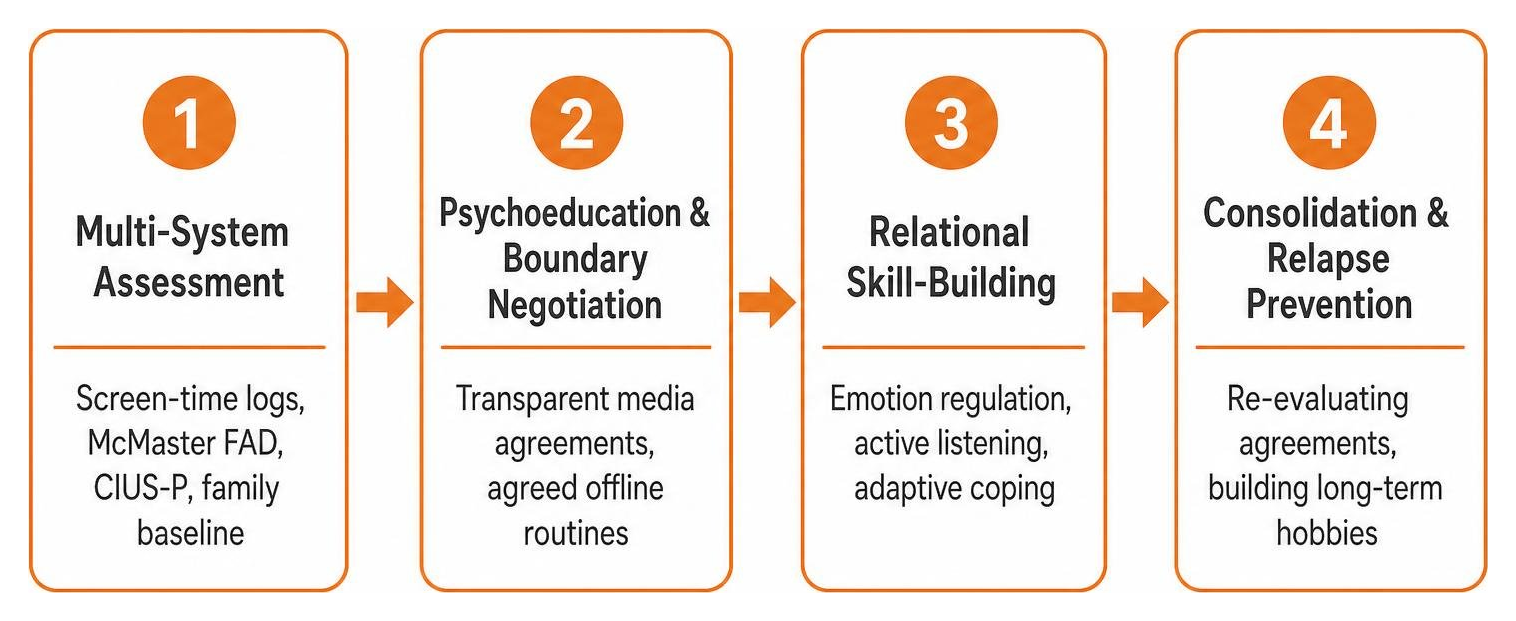
- Multi-System Assessment: We begin with validated screening tools, such as the Internet Addiction Test (IAT), the McMaster Family Assessment Device, and objective screen-time logs. This distinguishes between age-appropriate digital socialization and compulsive behavioral dependency.
- Psychoeducation and Boundary Negotiation: Families collaborate on clear digital agreements. Rather than imposing abrupt, punitive device bans that fuel conflict, we establish clear screen-free zones (e.g., bedrooms and family dinners) alongside guaranteed recreational offline time.
- Relational Skill-Building: Sessions focus on non-violent communication, emotion regulation, and resolving autonomy conflicts without defaulting to screen-based escapism.
- Consolidation and Relapse Prevention: As screen habits stabilize, we help families establish sustainable offline hobbies, manage academic workloads, and refine routines for lasting balance.

Adapting Family Therapy for Digital Addiction Across Diverse Cultural Contexts
Cultural values shape how families communicate, express authority, and navigate digital technologies. In many collectivist and Asian cultural settings—where much of the foundational internet addiction research has been conducted—family cohesion and parental guidance are strong foundational assets.
Applying systemic therapies across varied global environments requires careful cultural tailoring:
- Balancing Parental Authority and Autonomy: In cultures emphasizing individual autonomy, overly rigid top-down rules can trigger defiance. Therapy works to build collaborative agreements that respect a young person's growing independence.
- Managing Academic and Social Pressures: In high-pressure academic or professional environments, digital spaces often become an escape from real-world stress. Treatment helps address these underlying expectations rather than treating screen time in a vacuum.
- Destigmatizing Mental Health Support: We create safe, supportive spaces for caregivers who may feel shame or guilt regarding their child's digital struggles.
Structuring Telehealth Interventions for Sustainable Household Change
Modern family schedules are often busy and complex. Secure, HIPAA-compliant virtual care brings clinical support directly into the living room, eliminating travel time and allowing therapists to observe family interactions in their natural home environment.
Through our coordinated telehealth care packages, families access structured weekly sessions, convenient digital check-ins, and shared therapeutic resources. Reviewing expert insights from mental health blogs helps parents and young people stay informed on emerging clinical strategies, digital wellness, and systemic recovery tools throughout their care journey.
Frequently Asked Questions About Digital Addiction Interventions
How does family therapy compare to individual CBT for internet addiction?
Individual Cognitive-Behavioral Therapy (CBT) helps young people identify cognitive triggers, build distress tolerance, and manage impulse control. However, when an adolescent finishes an individual session and returns to high household conflict or unstructured home environments, old habits easily re-emerge.
Systemic family therapy reshapes the environment directly, improving parent-child communication and home structure. Research shows that while individual CBT offers clear benefits, adding family therapy or combining it with individual care yields superior, longer-lasting reductions in addiction severity and protects against relapse. You can find more answers in our frequently asked questions about virtual therapy.
What age groups benefit most from family-based screen addiction treatment?
Adolescents (ages 12–18) and transitional-age young adults (ages 19–24) show the strongest positive responses to family-centered care. Adolescents benefit directly from structured household routines, clear parental boundaries, and improved parent-child communication.
For young adults living at home or navigating college, family therapy helps address relational friction, clarify developmental expectations, and establish healthy lifestyle habits without falling into adversarial dynamics.
How long does family-based treatment typically take to show measurable results?
Most structured family therapy programs span 8 to 20 weekly sessions, depending on whether co-occurring mental health conditions are present. Initial improvements in daily communication, household tension, and screen-time compliance often emerge within the first 4 to 6 weeks.
Sustained emotional stability, reduced depressive symptoms, and long-term habits generally solidify over 3 to 6 months of coordinated care and ongoing boundary reinforcement.
Rebuilding Connection: Starting Your Family Recovery Plan
Overcoming compulsive screen use does not mean eliminating technology entirely from modern life. It is about creating a healthy relationship with digital devices so they serve your family's goals rather than undermining real-world connection, academic progress, and emotional well-being.
At All Points North Telehealth Therapy, our licensed, master's- and doctoral-level clinicians provide evidence-based, outcome-tracked virtual care. We work closely with families to heal communication divides, resolve underlying emotional distress, and build sustainable household routines. If your family is navigating the challenges of excessive screen use, connect with our team today to explore our virtual family therapy services and take the first step toward lasting balance.
References
Wang H, Li X, Lok GKI, Meng C, Tan Y, Lee UM, Lei LSM, Chan N. "Family-based therapy for internet addiction among adolescents and young adults: A meta-analysis.." Journal of behavioral addictions, 2024. PMCID PMC11220807. Nielsen P, Christensen M, Henderson C, Liddle HA, Croquette-Krokar M, Favez N, Rigter H. "Multidimensional family therapy reduces problematic gaming in adolescents: A randomised controlled trial.." Journal of behavioral addictions, 2021. PMCID PMC8996793.