Schedule Online Therapy and Reclaim Your Work-Life Balance
How to Fit Therapy Into a Busy Work Schedule

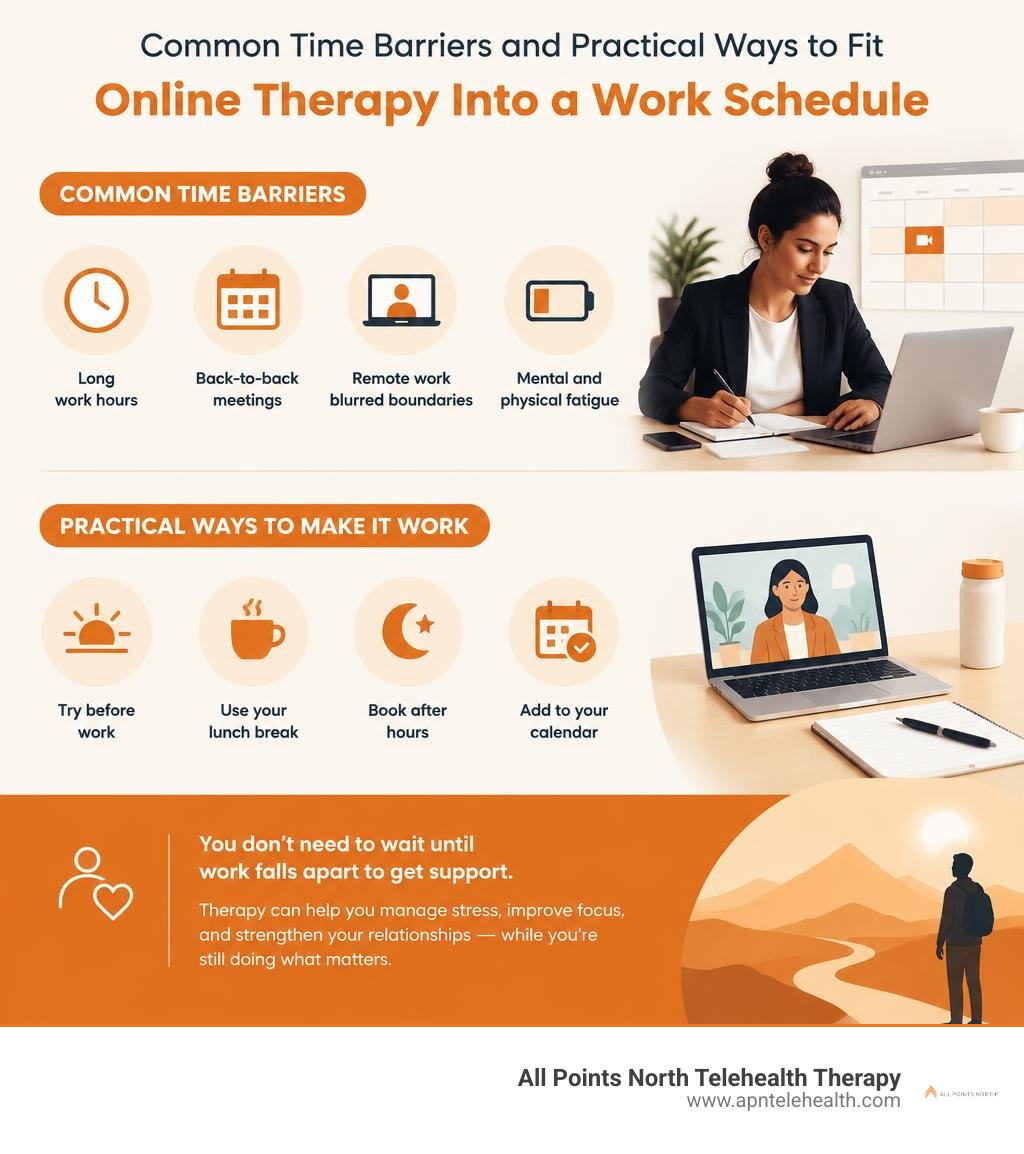
Start with a time you can protect. Look for online therapy appointments before work, during lunch, or after hours. Book a private space, add the session to your calendar, and ask a licensed therapist how often to meet based on your goals and schedule.
You do not need to wait until work falls apart to get support. If stress is affecting your sleep, focus, or relationships, therapy can help you address it while you are still keeping up with your responsibilities. According to the American Psychological Association, workplace stress costs U.S. businesses an estimated $300 billion annually in absenteeism, turnover, and lost productivity.
Recognizing When High-Functioning Professionals Need Mental Health Support

High performers are masters of adaptation. When deadlines pile up, client demands intensify, and responsibilities expand, you simply push through. Yet, this remarkable capacity to function under pressure often masks severe emotional exhaustion. According to the American Psychological Association, approximately 76% of U.S. workers report experiencing burnout on the job, with busy corporate leaders and professionals bearing the brunt of sustained, high-intensity workloads.
The trap for high achievers is equating functionality with well-being. You might still hit quarterly targets, lead presentations, and manage your team while quietly running on empty. Over time, perfectionism ceases to be an asset and becomes a liability, breeding decision fatigue and stalling your long-term career momentum. Recognizing that your baseline has shifted from thriving to merely surviving is the first step toward reclaiming your energy. Engaging in structured individual therapy provides a confidential sounding board to unpack performance pressure before it leads to full clinical exhaustion.
Subtle Signs You Need Therapy for Busy Professionals
Burnout rarely arrives overnight; it creeps in through subtle, daily shifts in how you think and feel. When evaluating whether you need dedicated mental health support, look for these early indicators:
- Disrupted Sleep Patterns: Waking up at 3:00 AM with racing thoughts about tomorrow's deliverables or struggling to turn off your brain at night.
- Emotional Detachment and Cynicism: Feeling numb toward accomplishments, disconnecting from team members, or viewing personal relationships as additional obligations.
- Shortened Fuse and Irritability: Losing patience over minor scheduling shifts, administrative delays, or routine operational questions.
- Imposter Syndrome: Fearing that you cannot sustain your current pace and that your perceived shortcomings will soon be exposed.
- Diminished Cognitive Clarity: Experiencing brain fog, difficulty making straightforward decisions, or needing double the time to complete standard tasks.
The Hidden Cost of "Just Managing" Stress
Telling yourself that you are "just managing" is a common coping mechanism, but prolonged chronic stress carries compounding costs. When you continuously operate in crisis mode, cognitive overload degrades your executive functioning, impairing your strategic judgment and risk assessment.
Beyond professional output, unaddressed stress erodes physical health, manifesting as chronic inflammation, migraines, digestive issues, and cardiovascular strain. Interpersonally, executive isolation sets in—leaders often feel they cannot show vulnerability to colleagues, while simultaneously lacking the emotional bandwidth to engage meaningfully with family. Investing in specialized therapy for busy professionals halts this cycle, helping you transition from constant damage control to proactive self-regulation.
Why Scheduling Barriers Matter and How Therapy for Busy Professionals Solves It
The average professional works 8.5 hours per day, and when you factor in family commitments, commuting, and travel, finding time for traditional healthcare feels nearly impossible. In fact, only 1 in 5 employees who need mental health care actually receive it, primarily due to rigid scheduling and logistical friction.
Traditional outpatient therapy was built around standard clinic hours, requiring a commute, waiting rooms, and rigid weekly slots. For someone leading board meetings or managing continuous deliverables, losing two hours for a 50-minute session simply does not work. Virtual teletherapy bridges this gap, allowing you to access doctoral- and master's-level clinicians directly from your laptop or secure mobile device.
| Traditional In-Person Therapy | Virtual Telehealth Therapy |
|---|---|
| Wait Times: 2–3 weeks average for an initial intake | Wait Times: Same-day or next-day appointments available |
| Travel Friction: 30–60 minutes commuting and parking | Travel Friction: Zero commute; connect instantly from any private space |
| Availability: Standard 9:00 AM – 5:00 PM business hours | Availability: Early mornings, lunch hours, evenings, and weekends |
| Privacy Concerns: Shared waiting rooms with colleagues or neighbors | Privacy Concerns: Fully confidential, encrypted, HIPAA-compliant virtual rooms |
| Travel Disruptions: Missed sessions during business trips | Travel Disruptions: Seamless continuity across state-licensed telehealth platforms |
Selecting Flexible Formats in Therapy for Busy Professionals
Telehealth therapy has increased by 38% among working adults since 2020, with 70% of users citing convenience as their primary reason. Because over 60% of busy professionals say they would attend therapy more regularly if sessions were available outside standard working hours, modern clinical models must adapt to varied routines.
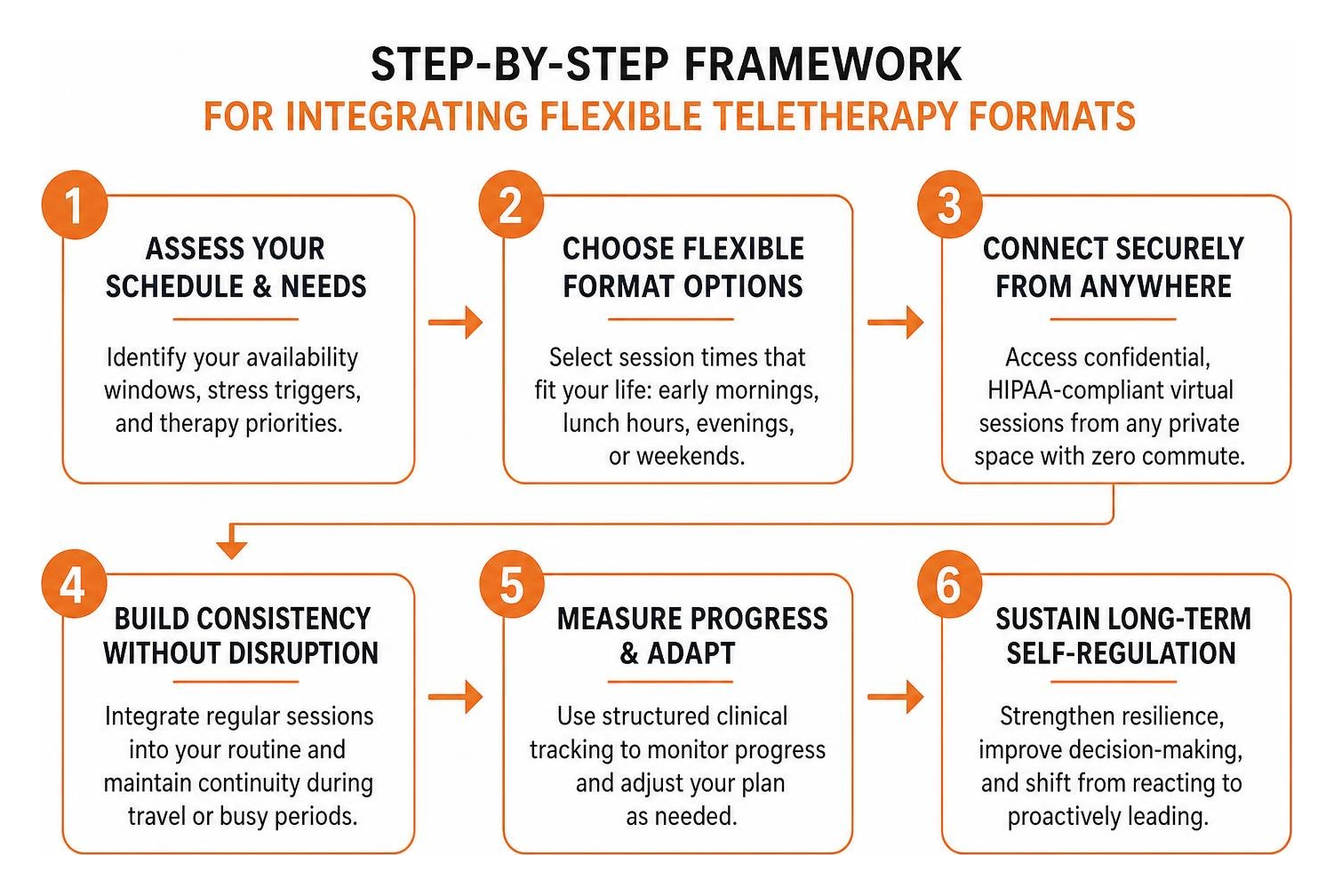
Whether you need a 7:00 AM session before the trading bell, an evening appointment after the kids are in bed, or a focused midday check-in, flexible scheduling accommodates your life. We offer comprehensive, customized telehealth care packages designed to meet you where you are, combining regular individual therapy with structured clinical tracking so your progress is measurable and sustainable.
Choosing Clinicians Experienced in High-Stress Careers
Not all therapy models suit the corporate or entrepreneurial landscape. When seeking support, it is vital to work with a licensed therapist who understands executive literacy—someone who recognizes the realities of high-stakes decision-making, investor demands, matrixed organizations, and performance-based compensation.
An experienced clinician helps you build pragmatic boundary management frameworks and utilizes evidence-based modalities like Cognitive Behavioral Therapy (CBT) and Acceptance and Commitment Therapy (ACT) to target high-stress triggers. To learn more about navigating professional stressors, explore our clinical mental health insights on our blog, where our clinical team regularly shares actionable strategies for psychological resilience.
How to Integrate Online Therapy into a Demanding Schedule

Fitting therapy into an already packed calendar requires the same intentionality you apply to critical business operations. By setting clear parameters, you can make mental healthcare a seamless part of your weekly routine:
- Treat Therapy as a Non-Negotiable Meeting: Block your therapy time as an immovable recurring appointment on your calendar (labeled neutrally, such as "Focus Block" or "Private Appointment").
- Utilize Automated Reminders: Set calendar notifications 15 minutes prior to ensure you have time to transition out of work tasks, grab water, and log into your secure session.
- Establish a Dedicated Sanctuary: Designate a quiet, private space—whether an executive suite with a closed door, a home office, or a parked car during a lunch break—where you can speak freely without fear of interruption.
- Debrief for Five Minutes: Build a small buffer post-session to jot down key takeaways and take a few grounding breaths before jumping back into meetings.
Maintaining Consistency Across Travel and Heavy Workloads
Business travel and fluctuating workloads are among the most common reasons professionals pause therapy. However, these demanding periods are precisely when therapeutic support is most valuable.
To maintain momentum while traveling, coordinate with your clinician across time zones, adjust your session cadence during high-intensity project launches (such as switching from weekly to bi-weekly sessions), and leverage micro-practices between appointments. Practicing targeted 2-minute nervous system regulation exercises during intense travel days ensures your clinical progress remains steady, regardless of your location.
Navigating Workplace Culture and Protecting Your Privacy
Confidentiality is often top of mind for high-visibility professionals, executives, and licensed practitioners. Telehealth platforms operate under strict HIPAA compliance, utilizing enterprise-grade encryption to ensure your health information and video sessions remain entirely secure.
To safeguard your privacy in corporate settings:
- Always use a personal laptop, tablet, or smartphone rather than a company-monitored device.
- Utilize virtual noise-canceling headphones to prevent audio bleed in adjacent rooms.
- Consider using a white noise machine or sound-masking app outside your office door.
- You are under no obligation to disclose medical appointments to employers or colleagues.
The Career and Personal ROI of Proactive Therapy
Viewing therapy solely as an expense of time overlooks its substantial return on investment. Professionals who actively engage in therapy report a 25% reduction in stress levels and a 30% improvement in overall work performance.
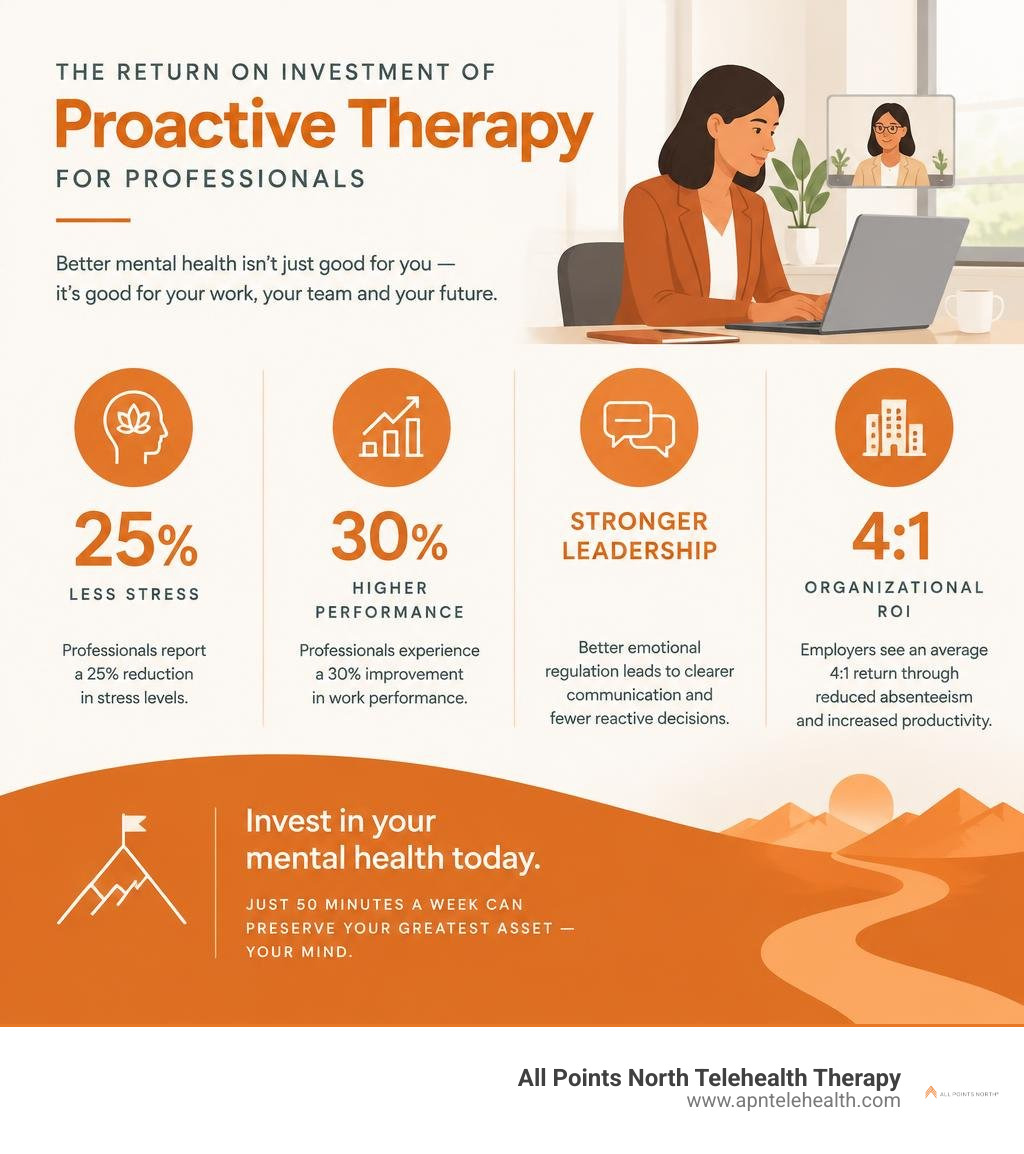
When you enhance your emotional regulation and cognitive agility, you make fewer impulse decisions, communicate more effectively under pressure, and lead teams with greater clarity. Furthermore, the economic benefits extend to organizations: employers who provide mental health support see an average 4:1 return on investment through reduced absenteeism and increased productivity. Investing 50 minutes a week into your psychological health preserves your highest-value asset—your mind.
Frequently Asked Questions
For more detailed information regarding insurance, clinical licensing, and platform security, visit our frequently asked questions page.
How do I maintain strict confidentiality when attending sessions during work hours?
To maintain absolute confidentiality, conduct your sessions from a private room with a closed door, use personal (non-employer) hardware and networks, wear headphones, and utilize a simple white-noise generator near the door to mask your voice from hallway foot traffic.
What if my travel schedule makes weekly recurring appointments impossible?
Online therapy offers flexibility that brick-and-mortar clinics cannot match. You can easily schedule sessions across different days or times each week, switch between early morning and evening slots, or utilize flexible scheduling options that align with your travel itinerary.
How quickly can a busy professional expect noticeable results from therapy?
While deep behavioral change takes consistent practice over several months, most professionals experience noticeable relief within the first 2 to 4 sessions. Initial gains typically include reduced acute anxiety, clearer prioritization skills, and practical, evidence-based coping tools you can immediately apply during high-stress workdays.
Conclusion
Sustaining a demanding career should not come at the expense of your mental health, relationships, or physical well-being. Proactive mental healthcare is not a sign of weakness—it is a vital operational strategy for long-term executive resilience and high-performance longevity.
At All Points North Telehealth Therapy, our licensed doctoral- and master's-level clinicians provide evidence-based, outcome-tracked care tailored around your demanding life. Whether you need flexible evening sessions, targeted stress management, or coordinated clinical care, we are here to support your journey. Reclaim your work-life balance today by accessing specialized care through our professional program.