Clinical Depression: Symptoms, Causes, and Diagnosis

Virtual counseling for depression is a flexible, evidence-based form of teletherapy that connects you with a licensed therapist through secure video sessions. It works by delivering the same structured, clinically proven interventions used in face-to-face care—such as cognitive behavioral therapy and interpersonal psychotherapy—while removing common barriers like travel, scheduling conflicts, and stigma. Research shows that virtual counseling produces symptom reduction and remission rates comparable to in-person therapy, making it an effective option for many people with mild to moderate depression.
Clinical depression—known formally as Major Depressive Disorder (MDD)—is far more than ordinary sadness or a passing low mood. While everyone navigates grief, disappointment, and temporary slumps, clinical depression is an encompassing medical condition that affects how you think, feel, sleep, eat, and function in daily life.
Globally, an estimated 5.2% of adults live with depression, making it the leading cause of disability worldwide and affecting more than 300 million people of all ages. In the United States alone, some 21 million American adults battle the disorder, with escalating numbers among young adults aged 18 to 25. Despite its widespread prevalence, significant barriers persist: in high-income nations, only about one-third of people with depression receive mental health treatment, while 76% to 85% of people in low- and middle-income countries receive no treatment at all.
When left unaddressed, depression can complicate every facet of wellness, increasing the risk of cardiovascular events and impairing personal and professional relationships. Engaging in individual therapy offers structured support to interrupt these patterns and foster long-term recovery.
Common Symptoms and Contributing Factors
Depression presents through an interconnected web of cognitive, emotional, and physical symptoms that persist for at least two consecutive weeks. Common signs include:
- Persistent Low Mood: Deep feelings of sadness, emptiness, irritability, or hopelessness.
- Anhedonia: A marked loss of interest or pleasure in activities, hobbies, and social connections you once enjoyed.
- Cognitive Difficulties: Trouble concentrating, making everyday decisions, or remembering details.
- Sleep Disturbances: Severe insomnia, early morning awakening, or hypersomnia (sleeping excessively yet waking exhausted).
- Fatigue and Energy Loss: Chronic, heavy physical tiredness where minor tasks require intense effort.
- Appetite and Weight Shifts: Significant unintended weight loss or gain due to changes in appetite.
- Feelings of Worthlessness: Excessive, inappropriate guilt or self-blame.
- Recurrent Thoughts of Death: Passive wishes not to wake up or active suicidal ideation.
Depression does not stem from personal weakness or a simple lack of willpower. It arises from an intricate interplay of biological, psychological, and environmental factors. Neurochemical shifts involving serotonin, dopamine, and norepinephrine pathways, combined with neuroinflammation and genetic predispositions, establish biological vulnerability. When compounded by environmental stressors—such as adverse childhood experiences, acute trauma, chronic workplace stress, or medical illness—these factors can trigger a depressive episode.
Diagnostic Standards and Clinical Assessment
Arriving at an accurate diagnosis requires an evaluation by a licensed mental health professional or physician. Clinicians rely on established diagnostic frameworks (such as the DSM-5) and standardized psychometric instruments to gauge symptom presence and severity:
- Clinical Interview: A comprehensive evaluation covering mental health history, personal stressors, medical history, and behavioral shifts.
- Validated Questionnaires: Tools such as the Patient Health Questionnaire-9 (PHQ-9) and the Beck Depression Inventory (BDI) quantify depressive symptoms and track progress over time.
- Medical Rule-Outs: Blood panels and physical examinations to rule out physiological mimics of depression, such as hypothyroidism, vitamin D deficiency, or anemia.
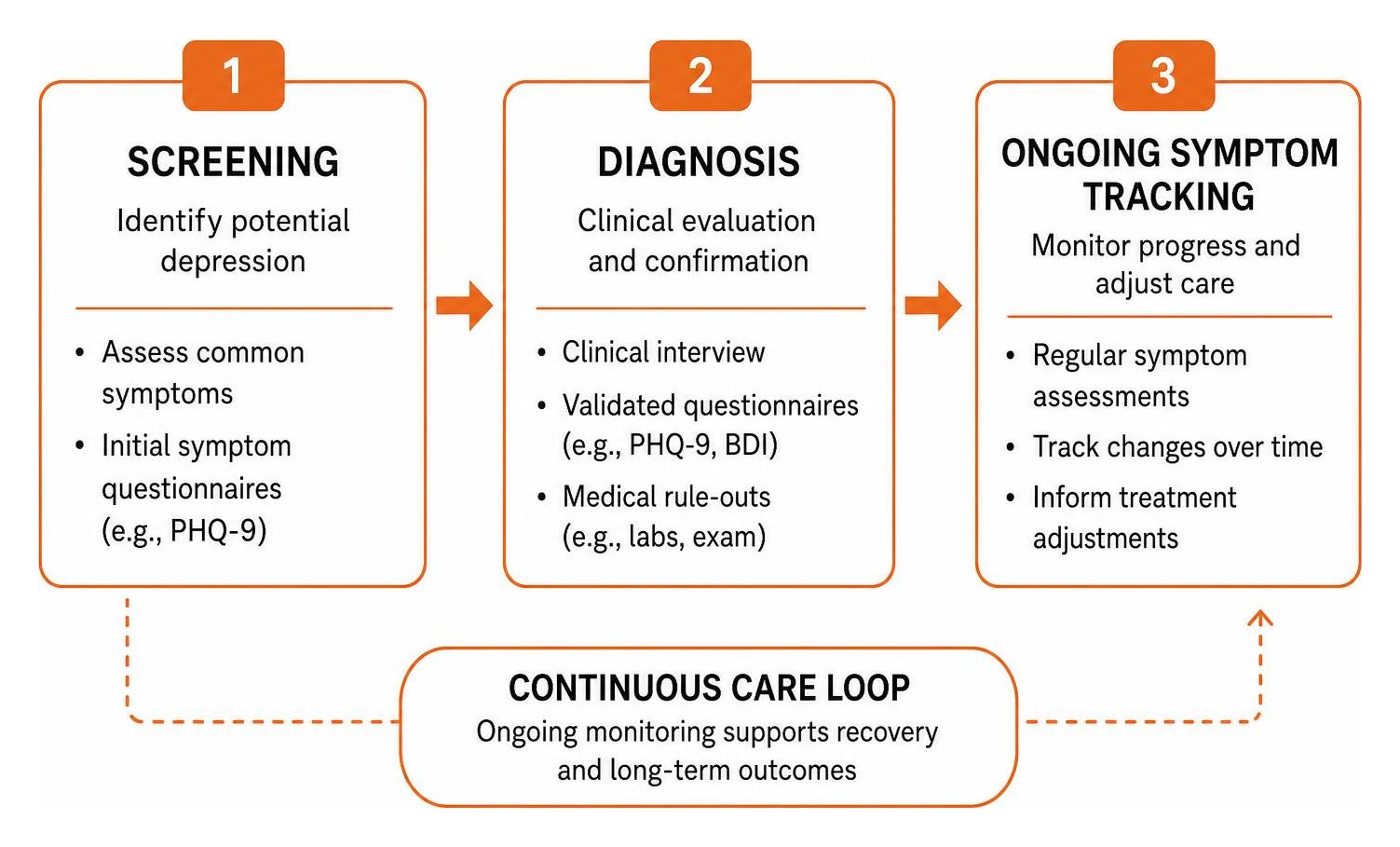
This structured evaluation ensures that underlying physical causes are ruled out and enables clinicians to build a personalized, outcome-monitored treatment roadmap tailored to your specific needs.
The Proven Efficacy of Virtual Counseling for Depression
A common question when exploring remote mental healthcare is whether connecting through a screen offers the same clinical depth and effectiveness as sitting in a traditional therapist's office. Over the past several years, extensive clinical research has validated teletherapy as a frontline treatment for depressive disorders.
A comprehensive systematic review and meta-analysis on the efficacy of virtual care for depressive disorders examined 24 clinical trials involving adults with depression (Schiller et al., 2023). The findings demonstrated that virtual interventions increase the odds of clinical remission tenfold compared to waitlist control conditions (OR = 10.30) and more than double remission odds compared to treatment-as-usual (OR = 2.27) (Schiller et al., 2023). Crucially, when comparing virtual counseling directly against in-person therapy, researchers found no significant difference in clinical efficacy or remission rates (OR = 0.84, 95% CI 0.51–1.37) (Schiller et al., 2023).
Online modalities reliably reduce symptom severity, proving that the therapeutic alliance—the trust and collaborative bond between client and therapist—flourishes just as robustly across a secure video stream.
Clinical Benefits and Treatment Engagement
Virtual counseling eliminates many of the practical hurdles that keep individuals from seeking or sustaining care:
- Removal of Travel Barriers: Eliminating long commutes, traffic, and parking saves time and accommodates those living in rural areas or mental health provider deserts.
- Scheduling Flexibility: Flexible morning, evening, or midday appointment times make it easier to maintain consistent weekly sessions around work and family commitments.
- Comfort and Emotional Safety: Engaging in therapy from your own home allows you to unpack difficult emotions in a familiar, grounded setting.
- Heightened Discretion: Virtual sessions remove the worry of running into acquaintances in public waiting rooms, helping to dismantle social stigma.
- Treatment Continuity: Traveling for work or managing mild physical illness no longer requires canceling sessions, preserving therapeutic momentum.
Practical Limitations and Considerations
While teletherapy is a versatile and evidence-based option for mild to moderate depression, it has distinct boundaries:
- Acute Crisis and Severe Presentations: Individuals experiencing active suicidal ideation with immediate intent, acute psychosis, or severe treatment-resistant crises generally require higher levels of care, such as intensive outpatient programs (IOP), partial hospitalization, or residential stabilization.
- Technical and Environmental Needs: A stable high-speed internet connection, an updated device, and a private room free from interruptions are essential for meaningful engagement.
- Subtle Nonverbal Cues: Video feeds can occasionally obscure subtle somatic signals, requiring therapists and clients to communicate internal states more explicitly.
| Feature | Virtual Counseling | In-Person Counseling |
|---|---|---|
| Geographic Accessibility | Available anywhere within the provider's licensed state | Restricted to commutable geographic radius |
| Scheduling Flexibility | High (eliminates commute times) | Moderate (requires transit time) |
| Privacy & Discretion | High (attend from home) | Moderate (shared waiting rooms) |
| Clinical Efficacy (Mild/Mod MDD) | Equivalent to in-person care | High standard of care |
| Severe Crisis Suitability | Requires structured safety plan or referral | Suited for on-site escalation |
Evidence-Based Modalities Delivered Remotely
Effective virtual treatment relies on evidence-based psychotherapeutic frameworks tailored to the individual. Our clinicians deliver structured care through specialized telehealth care packages designed to meet clients at their specific stage of recovery.
Core Modalities in Virtual Counseling for Depression
Cognitive Behavioral Therapy (CBT)
Cognitive Behavioral Therapy stands as one of the most widely researched interventions for depression. CBT operates on the principle that psychological distress is maintained by unhelpful patterns of thinking and behavior. In a virtual environment, clients and therapists use digital worksheets and interactive exercises to:
- Identify and challenge cognitive distortions (e.g., all-or-nothing thinking, catastrophizing).
- Conduct behavioral experiments to test the accuracy of self-critical beliefs.
- Implement behavioral activation, systematically scheduling rewarding, value-aligned activities to counteract depressive withdrawal and fatigue.
Problem-Solving Therapy (PST)
Depression frequently saps executive functioning, making everyday life obstacles feel insurmountable. PST is a structured, practical intervention that teaches individuals active coping skills to break down overwhelming problems into actionable steps, evaluate solutions, and build problem-solving self-efficacy.
Interpersonal and Mindfulness-Based Approaches
Interpersonal Psychotherapy (IPT)
IPT focuses on resolving interpersonal issues that trigger or maintain depressive episodes. Delivered seamlessly over video, IPT addresses four core domains:
- Unresolved Grief: Processing complicated losses.
- Role Transitions: Navigating major life changes, such as career shifts, divorce, or parenthood.
- Role Disputes: Resolving chronic conflicts with partners, family members, or colleagues.
- Interpersonal Deficits: Building social communication skills to reduce isolation.
Mindfulness-Based Cognitive Therapy (MBCT)
MBCT combines traditional cognitive therapy tools with mindfulness practices. By cultivating present-moment awareness, clients learn to observe depressive rumination and negative self-talk without judgment, recognizing them as transient mental events rather than absolute truths.
Getting Started: Preparation, Self-Care, and Crisis Protocols
Beginning virtual therapy is straightforward, but taking a few deliberate steps to prepare ensures you get the most out of every session. If you have administrative or logistical questions along the way, reviewing our frequently asked questions can provide clarity on intake and insurance processes.

What to Expect During Virtual Counseling for Depression
- Initial Assessment and Intake: Your first session centers on an in-depth clinical evaluation. Your therapist will explore your history, symptom timeline, previous treatment experiences, and current struggles.
- Collaborative Goal Setting: Together, you and your clinician will define clear, measurable benchmarks for what recovery looks like—whether that means improving sleep, returning to hobbies, or reducing depressive thoughts.
- Active Weekly Sessions: Standard sessions last 45 to 50 minutes. You will review progress, practice clinical techniques, and explore emotional barriers.
- Between-Session Integration: Sustainable change happens throughout the week. Therapists frequently assign practical exercises, such as mood tracking, cognitive restructuring logs, or behavioral activation schedules.
- Ongoing Outcome Tracking: Clinicians regularly re-administer tools like the PHQ-9 to measure symptom reduction objectively and adjust the treatment plan as needed.
Complementary Self-Care and Crisis Support
Virtual counseling is most effective when paired with lifestyle habits that support brain health and emotional regulation:
- Sleep Hygiene: Maintain consistent sleep and wake times to help stabilize circadian rhythms.
- Physical Activity: Regular, moderate movement—such as daily walking—promotes neuroplasticity and elevates mood-regulating endorphins.
- Nutritional Support: Focus on whole foods, adequate hydration, and omega-3 fatty acids to nourish the gut-brain axis.
- Intentional Social Connection: Counteract the depressive urge to withdraw by maintaining regular contact with trusted friends, loved ones, or support groups.
Crisis Intervention and Safety Protocols
Therapy provides sustained healing, but acute emergencies require immediate intervention. If you or someone you know is experiencing active suicidal thoughts, self-harm impulses, or an overwhelming mental health crisis:
- Call or Text the 988 Suicide & Crisis Lifeline: Dial 988 (available 24/7, free, and confidential across the United States and Canada).
- The Crisis Text Line: Text HOME to 741741 to connect with a crisis counselor.
- Emergency Services: Call 911 or visit the nearest hospital emergency room.
Clinicians work proactively with every virtual client during intake to draft a personalized safety plan, identifying emergency contacts, local urgent care resources, and coping strategies for unexpected distress.
Frequently Asked Questions About Online Therapy
What outcomes can I expect from remote depression treatment?
Research shows that virtual therapy produces symptom reduction and remission rates comparable to traditional in-person therapy. Most clients notice improvements in mood, clarity, and daily functioning within 8 to 12 structured sessions, with progress reinforced through consistent attendance and active between-session practice.
What should I do if I experience thoughts of suicide?
If you experience immediate thoughts of self-harm or suicide, access emergency support right away. Call or text the 988 Suicide & Crisis Lifeline by dialing 988, text 741741, call 911, or proceed to the nearest emergency room. Teletherapy provides ongoing clinical care, but it is not a replacement for immediate emergency crisis response.
What technology and privacy safeguards are required for teletherapy?
You will need a reliable internet connection and a private device (computer, tablet, or smartphone) equipped with a working camera and microphone. Sessions take place over dedicated, encrypted video platforms that comply with federal HIPAA privacy regulations. We recommend setting up in a private room with closed doors and using headphones to ensure confidentiality.
Conclusion
Depression can make everyday life feel heavy and isolating, but you do not have to carry it on your own. Decades of clinical research, reinforced by modern technological advancements, confirm that remote mental health care offers an accessible, flexible, and deeply effective path toward sustainable recovery.
At All Points North Telehealth Therapy, our licensed, master's- and doctoral-level clinicians deliver coordinated, evidence-based care tailored to your unique story. With outcome-tracked interventions and seamless access to our broader treatment continuum, we are here to support your journey toward lasting wellness.
Take the first step toward feeling better today by exploring our personalized individual therapy options.
Scientific References
Schiller CE, Prim J, Bauer AE, Lux L, Lundegard LC, Kang M, Hellberg S, Thompson K, Webber T, Teklezghi A, Pettee N, Gaffney K, Hodgins G, Rahman F, Steinsiek JN, Modi A, Gaynes BN. "Efficacy of Virtual Care for Depressive Disorders: Systematic Review and Meta-analysis.." JMIR mental health, 2023. PMCID PMC9871881.