Understanding Virtual Individual Therapy and How It Works

Virtual individual therapy translates the clinical depth of traditional talk therapy into a secure digital environment. Through encrypted video conferencing or telephone calls, you connect directly with a licensed clinician to address emotional distress, process trauma, dismantle unhelpful patterns, and build healthy coping mechanisms.
At its foundation, telebehavioral health uses the same evidence-based modalities found in clinic offices. Approaches such as Cognitive Behavioral Therapy (CBT), Acceptance and Commitment Therapy (ACT), psychodynamic therapy, and exposure protocols remain just as structured and collaborative online. Your clinician works with you to identify specific triggers, evaluate cognitive distortions, and practice behavioral interventions in real time—often within the very home or work environments where those triggers naturally occur. According to the American Psychological Association, telehealth has become a core delivery method for psychological services, with research supporting its effectiveness across a range of conditions.
While individual counseling focuses entirely on your personal inner landscape and personal challenges, remote therapy comes in various formats to serve distinct relationship dynamics and professional pressures.
| Modality | Primary Focus | Best Suited For | Format & Structure |
|---|---|---|---|
| Virtual Individual Therapy | Personal mental health, coping skills, trauma processing, self-discovery | Individuals managing depression, anxiety, PTSD, life transitions, or chronic stress | 45–60 minute one-on-one video sessions with a dedicated clinician |
| Virtual Family Therapy | Interpersonal patterns, systemic family dynamics, conflict resolution | Families working through communication barriers, parenting challenges, or shared grief | Multi-participant video sessions balancing collective dynamics and mediation |
| Professional Teletherapy | Workplace burnout, executive stress, professional identity, performance fatigue | Busy executives, healthcare workers, and professionals needing flexible scheduling | High-confidentiality individual sessions tailored around rigorous professional schedules |
Core Benefits and Clinical Effectiveness
Clinical research consistently shows that remote counseling delivers outcomes on par with traditional in-person care. Evidence demonstrates that virtual talk therapy effectively reduces symptoms of major depressive disorder, generalized anxiety, panic disorder, and post-traumatic stress disorder (PTSD).
The therapeutic alliance—the collaborative bond and trust between you and your provider—develops just as deeply through a screen as it does across a room. Removing long commutes, waiting rooms, and geographic constraints often leads to more consistent attendance and lower dropout rates. For individuals managing social anxiety, mobility limitations, or demanding workdays, accessing dedicated individual therapy online eliminates significant barriers to consistent healing.
Privacy, HIPAA Compliance, and Legal Standards
Confidentiality remains the cornerstone of mental healthcare, regardless of where sessions take place. Professional teletherapy platforms must comply fully with the Health Insurance Portability and Accountability Act (HIPAA), utilizing end-to-end encryption to protect video feeds, chat logs, and medical records.
Legally, clinicians must be licensed in the state or jurisdiction where you are physically located during the session. During onboarding, your therapist will provide informed consent documents explaining your rights, data security protocols, emergency plans, and the boundaries of confidentiality—such as legal mandates regarding self-harm, harm to others, or child and elder abuse.
Preparing for Your Sessions and Navigating Technology
Getting the most out of remote counseling requires intentional preparation. Establishing a quiet, dedicated space signals to your brain that it is time to step out of your daily routine and focus inward.
To minimize technical hiccups and optimize your experience:
- Choose a private setting: Pick a closed room where family members, roommates, or coworkers cannot overhear you. Using a sound machine or playing white noise outside the door can add an extra layer of privacy.
- Check your audio and video: Use a headset or earbuds with a built-in microphone to reduce echo and keep your clinician's voice private. Position your camera at eye level with soft, front-facing lighting.
- Ensure stable internet: Close unnecessary browser tabs, streaming apps, or background downloads that eat up bandwidth. If Wi-Fi is spotty, plugging directly into your router via an ethernet cable provides the most reliable connection.
- Manage distractions: Silence phone notifications, turn off email alerts, and bring a notebook, a glass of water, and tissues to your workspace.
Handling Technical Disruptions and Interruptions
Occasional glitches happen to everyone. Before starting, you and your therapist will establish a clear backup plan in case of a dropped call or frozen screen.
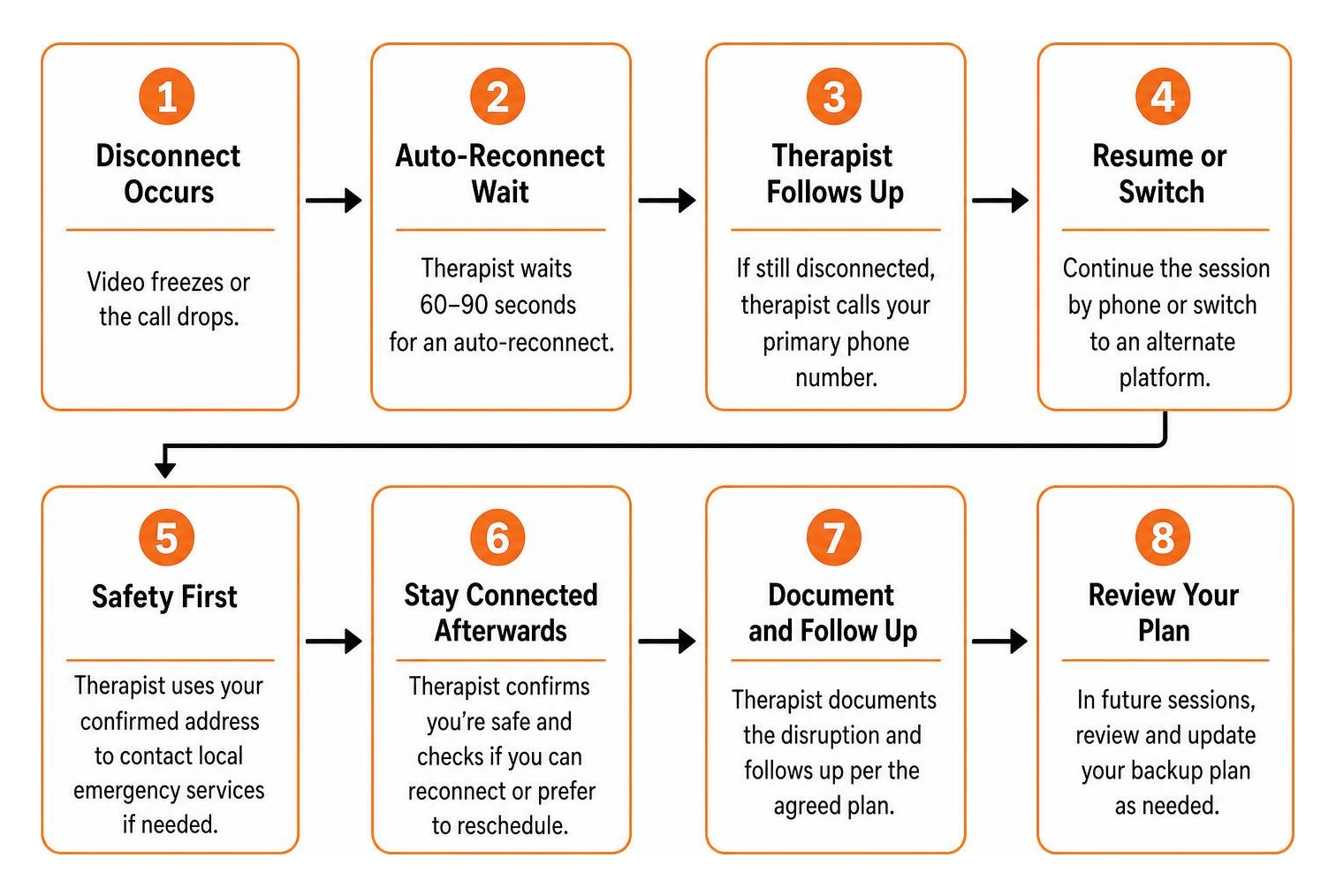
If the video freezes, clinicians typically wait 60 to 90 seconds for an auto-reconnect before calling your primary phone number to finish the session or switch platforms. Your therapist will also confirm your physical address at the start of care, ensuring local emergency services can be reached if a crisis arises during an unexpected disconnection.
The First Session: What to Expect and Setting Goals
Your initial session serves as a clinical intake. It is an open, structured dialogue designed to map out your background, current stressors, family history, and primary reasons for seeking support.
Your clinician will explain their therapeutic style, clarify logistical details like billing and scheduling, and collaborate with you on measurable goals. You might focus on managing panic attacks, processing a painful breakup, establishing work-life boundaries, or breaking cycles of negative self-talk. This first meeting is also your opportunity to evaluate the clinician and see if their communication style feels comfortable and supportive.
Selecting Qualified Clinicians and Managing Care Costs
Finding the right clinician involves balancing clinical expertise, personal rapport, and financial sustainability. You can work with licensed clinical social workers (LCSWs), licensed professional counselors (LPCs), licensed marriage and family therapists (LMFTs), or clinical psychologists (PhDs/PsyDs). Each credential requires thousands of supervised clinical hours and ongoing professional education.
Therapy costs vary based on provider credentials, location, and session frequency. Many insurance plans cover telehealth services at the same rate as in-person visits. If using out-of-network benefits, you can request a monthly billing summary (a superbill) to submit for direct reimbursement. For transparent, self-pay options, structured telehealth care packages can make budgeting for ongoing treatment straightforward.
Identifying Red Flags in Virtual Individual Therapy
While most remote clinicians maintain strict standards, being aware of ethical boundaries protects your safety and recovery.

Watch out for these common warning signs:
- Unclear credentials: The provider refuses to share their full license number, supervisor details, or verifiable state credentials.
- Boundary crossings: A therapist contacts you on personal social media, shares excessive details about their own life, or attempts to form a dual personal or business relationship.
- Poor session etiquette: Clinicians who take calls, drive, eat meals, or appear distracted during your paid session time.
- Guaranteed quick fixes: Anyone promising to permanently cure complex mental health conditions within a few days or weeks.
- Platform insecurity: Insisting on using non-HIPAA-compliant, public messaging platforms that put your personal data at risk.
If you encounter an unethical or practicing-without-a-license provider, you can report them directly to their respective state licensing board.
Coordinating Additional Care When Needed
Therapy works best when it adapts to your changing needs. Some seasons of life require more than weekly 50-minute talk sessions. You may benefit from targeted psychiatric evaluations for medication management, specialized trauma protocols, or supportive educational resources. Discovering evidence-informed coping tools through our mental health blog insights can also reinforce the work you do in your private sessions.
When symptoms require more intensive care, having clinical oversight and smooth coordination across a broader continuum of care ensures you receive the right level of support without having to start over from scratch.
Determining Fit and Knowing When Therapy Ends
Therapy is not meant to last forever. Its true goal is to equip you with the self-awareness, emotional regulation tools, and resilience needed to navigate life independently.
Knowing when to conclude treatment is a collaborative decision made with your clinician. You might be ready to wrap up or step down frequency when:
- You consistently use healthy coping mechanisms when faced with old triggers.
- Your initial symptoms of anxiety, depression, or distress have noticeably decreased.
- You have achieved the personal milestones outlined in your initial treatment plan.
- You feel confident in your ability to solve problems and manage setbacks on your own.
Ending therapy involves a planned discharge process over several sessions. You will review progress, celebrate personal growth, develop a relapse prevention strategy, and establish an open-door policy should you wish to return for "tune-up" sessions during future life transitions.
Frequently Asked Questions About Virtual Therapy
Navigating online mental healthcare can bring up practical questions. Explore our comprehensive answers to common concerns for more details.
How does virtual individual therapy coordinate with other care?
Your therapist can coordinate care with your primary care physician, psychiatrist, or outside specialists by having you sign a standard release of information. This collaboration ensures that medication management, physical health factors, and behavioral strategies align safely. If your needs change, clinicians can also help you step up into group therapy, intensive outpatient programs (IOP), or specialized clinical tracks.
How do I know if virtual counseling is right for my needs?
Remote counseling is an excellent match for mild to moderate depression, stress management, generalized anxiety, life transitions, and ongoing trauma work. However, if you are experiencing active psychosis, severe unmanaged substance dependence, or immediate, high-risk suicidal ideation, an in-person clinic, partial hospitalization program, or crisis stabilization center provides a safer level of hands-on, round-the-clock support.
What should I do if my internet connection drops during a session?
If your call drops, refresh your browser or app first. If you cannot reconnect within two minutes, check your phone. Your clinician will typically reach out via a direct voice call to either finish the remaining minutes of your session over the phone or reschedule if technical difficulties cannot be resolved quickly.
Conclusion
Taking the step to prioritize your mental health is an act of courage. Virtual individual therapy delivers clinical expertise, personalized strategies, and compassionate space directly to you—giving you the freedom to heal in an environment where you feel most at ease. With professional clinical oversight and evidence-based methods, real progress is always within reach.
Take the next step in your healing journey. When you are ready to connect with an experienced clinician who fits your goals, begin your virtual individual therapy journey with All Points North Telehealth Therapy today.