5 Ways Reintegration and Relocation Disrupt the Military Household

Family therapy for military families eases reintegration and relocation by building shared family narratives, teaching emotional regulation, realigning parenting roles, and addressing systemic combat stress before these pressures harden into household crises. Military life demands extraordinary adaptability, but the transitions between separation, reunion, and permanent change of station (PCS) moves often create complex relational friction. Approximately 43% of all military personnel are parents, meaning millions of children navigate the realities of operational tempo alongside their active-duty caregivers.
When an active-duty parent returns from deployment or a family packs up for another cross-country move, household systems experience immediate pressure across several areas:
- Role Realignment and Disrupted Routines: While a service member is away, the civilian spouse or at-home caregiver manages single-parent logistics, household maintenance, and financial decisions. Upon return, renegotiating authority, daily chores, and decision-making can spark friction between partners.
- Developmental Regression and Behavioral Shifts in Children: Toddlers and young children may experience separation anxiety or clinginess when a parent reappears, sometimes failing to recognize them immediately. School-age children may display sudden defiance, emotional outbursts, or academic drops as they process shifting household rules.
- Cumulative Relocation Fatigue: Frequent PCS orders force families to rebuild social support networks, adjust to new school systems, and find new healthcare teams from scratch every two to three years. This ongoing churn strips away the natural community buffers that protect against caregiver fatigue.
- Adolescent Adjustment Challenges: Teenagers face specific social and academic disruptions during relocations and re-entries. Research shows that cumulative deployment separations place substantial strain on adolescent emotional adjustment, often resulting in withdrawal, anxiety, or depressive symptoms.
- Caregiver Burnout and Secondary Traumatic Stress: The non-deployed spouse frequently shoulders severe chronic stress during extended deployments. Studies on the Mechanisms of Risk and Resilience in Military Families emphasize that at-home parents experience significant distress, which directly compounds when the service member returns home carrying their own operational stress.
Incomplete Understanding of Deployment Impact and Combat Stress
When a service member returns home, both the service member and their loved ones often expect an immediate sense of relief. However, combat operational stress, hypervigilance, and emotional numbing do not simply vanish upon passing through the front door.
Returning personnel may react strongly to sudden loud noises, crowded civilian environments, or unexpected household chaos. When partners and children do not understand that these reactions stem from physiological survival conditioning, they may misinterpret emotional withdrawal as rejection or anger.
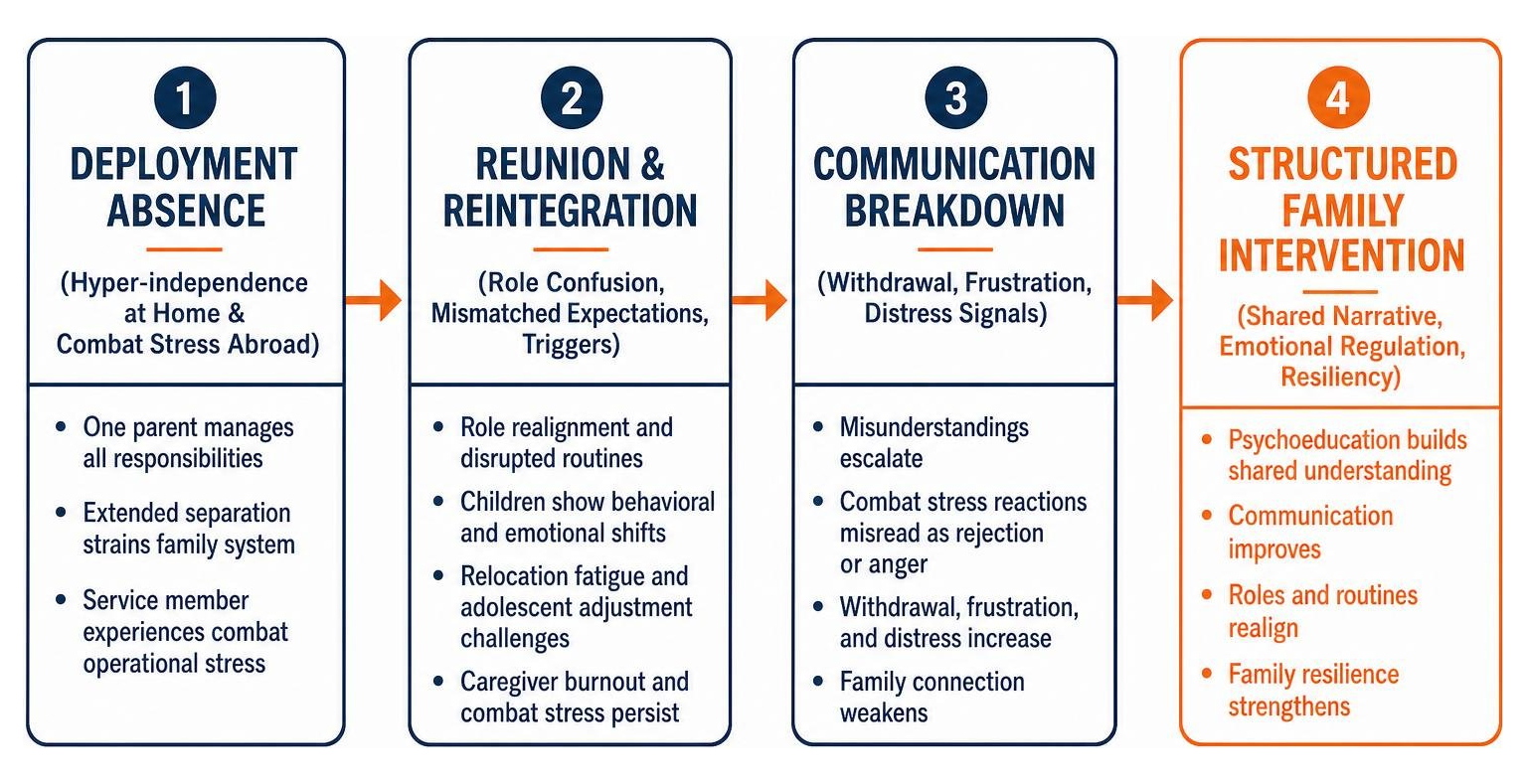
Without clear psychoeducation, communication breakdowns quickly escalate into chronic misunderstandings. The at-home spouse may feel unappreciated for carrying the family through the deployment, while the returning service member feels alien in their own living room. Clinical reviews of Systemic Prevention and Intervention Approaches demonstrate that combat operational stress cascades across the entire family system, making it essential to treat the relational environment rather than viewing symptoms in isolation.
Impaired Parenting Practices and Relocation Strain
Parenting requires consistency, emotional presence, and flexible boundaries—all of which are easily compromised by the operational cycle. A parent struggling with lingering combat fatigue or hypervigilance may alternate between rigid, military-style discipline and emotional withdrawal. Simultaneously, a civilian parent exhausted by months of sole custody may struggle with boundary enforcement.
Frequent moves compound these parenting challenges. Changing schools disrupts academic momentum and severs vital friendships, leaving children feeling powerless. In response, children often communicate their distress through behavioral changes, bedtime battles, or heightened emotional volatility. Without intentional parenting reflectivity—the ability to understand a child's internal mental state and emotional needs behind their acting out—parents may respond with punitive measures, deepening the child's distress and destabilizing the household further.
Family Therapy Approaches for Military Families
Modern family interventions for military households have evolved beyond traditional, individual-focused models. Today's evidence-based frameworks emphasize structured, family-centered support designed to strengthen natural protective factors and build mutual resilience across all branches of service.

Shared Family Narratives and Resiliency Skills
One of the most extensively researched models for military households is the Families OverComing Under Stress (FOCUS) program, developed by clinical teams at UCLA and Harvard Medical School. Delivered primarily as an eight-session Individual Family Resiliency Training (IFRT), this preventive intervention systematically addresses deployment distress through several core mechanisms:
- Real-Time Assessment and Feedback: Families complete online assessments that identify specific family strengths, distress levels, and communication gaps, allowing clinicians to tailor every session.
- The Shared Family Narrative: Parents and children work separately and together to build a unified timeline of the deployment and reintegration experience. By piecing together their individual stories, family members bridge emotional gaps, clarify misconceptions, and process shared challenges without blame.
- Emotional Regulation Tools: Family members learn practical coping mechanisms—such as the "Feelings Thermometer," paced breathing, and grounding exercises—to manage emotional spikes before conflicts escalate.
- Trauma Reminder Management: Clinicians help families identify specific environmental triggers (such as unexpected loud sounds or crowded events) and build concrete family action plans to navigate them safely.
- Collaborative Goal Setting and Problem Solving: Sessions teach structured communication exercises that help families resolve daily logistical and emotional hurdles cooperatively.
The empirical evidence supporting these structured approaches is compelling. Research examining FOCUS outcomes demonstrates significant reductions in child emotional and behavioral distress, accompanied by measurable increases in prosocial behaviors and positive coping strategies. On the Brief Symptom Inventory, both service members and civilian parents showed significant reductions in psychological distress symptoms. Furthermore, evaluation using the McMaster Family Assessment Device confirmed substantial improvements across family problem solving, affective responsiveness, communication clarity, and behavioral control.
In its second year of implementation alone, enrollment in the FOCUS IFRT program grew from 306 families in Year 1 to 581 families, while over 5,700 individuals participated in skill-building groups. Notably, 36% of participants were self-referred, highlighting a strong appetite for structured, non-stigmatizing family support when framed around skill building and resilience.
Reflective Parenting and Family Skills
For households with infants and young children, structured group models provide essential developmental support. Interventions like the Strong Military Families program focus specifically on enhancing parenting reflectivity and emotional attunement during separation and reunion phases.
By engaging in multifamily groups and structured parent-child interactions, parents receive in-the-moment feedback on developmental expectations and emotional bonding. Research evaluating these initiatives shows that parents who participate in structured, group-based reflective exercises demonstrate significant improvements in parenting reflectivity and emotional connection compared to those who rely solely on self-guided reading materials. These shared learning spaces break the isolation of military life, giving parents practical tools to maintain secure attachments despite frequent relocations and operational disruptions.
What to Expect From Clinical Family Therapy
While preventive resilience programs like FOCUS and short-term installation support like the Military and Family Life Counseling (MFLC) program offer vital non-medical coping strategies, some family challenges require comprehensive, specialized clinical psychotherapy. MFLC counselors provide up to 12 sessions of confidential, non-medical counseling per issue for everyday stressors, but they are not permitted to diagnose or treat clinical conditions such as post-traumatic stress disorder (PTSD), major depressive disorder, traumatic brain injury (TBI), or complex family pathology.
When operational trauma, severe depression, persistent adolescent behavioral crises, or deep marital fractures overwhelm daily coping mechanisms, formal clinical family therapy is necessary.
| Feature / Modality | Preventive & Short-Term Support (e.g., FOCUS, MFLC) | Clinical Family Therapy (e.g., APN Telehealth) | Individual Psychotherapy |
|---|---|---|---|
| Primary Focus | Skill building, deployment psychoeducation, short-term adjustment | Systemic clinical assessment, healing relational injuries, treating co-occurring diagnoses | Individual symptom reduction, trauma processing, personal coping |
| Session Structure | 6–12 psychoeducational or counseling sessions per topic | Comprehensive, ongoing treatment plan tailored to relational and clinical goals | Weekly 45–60 minute individual sessions |
| Clinical Scope | Non-medical counseling; does not diagnose or treat major disorders | Licensed master’s/doctoral care; treats PTSD, mood disorders, complex family dynamics | Licensed master’s/doctoral care; treats individual psychiatric diagnoses |
| Target Participants | Entire family or parenting groups | Couple, whole family unit, and parent-child subsystems | Service member or family member individually |
| Care Delivery | Installation centers, schools, base clinics, walk-around coaching | Secure, HIPAA-compliant virtual teletherapy platform or clinical clinic | Virtual teletherapy or in-person private practice |
How Family Therapy Addresses Interconnected Needs
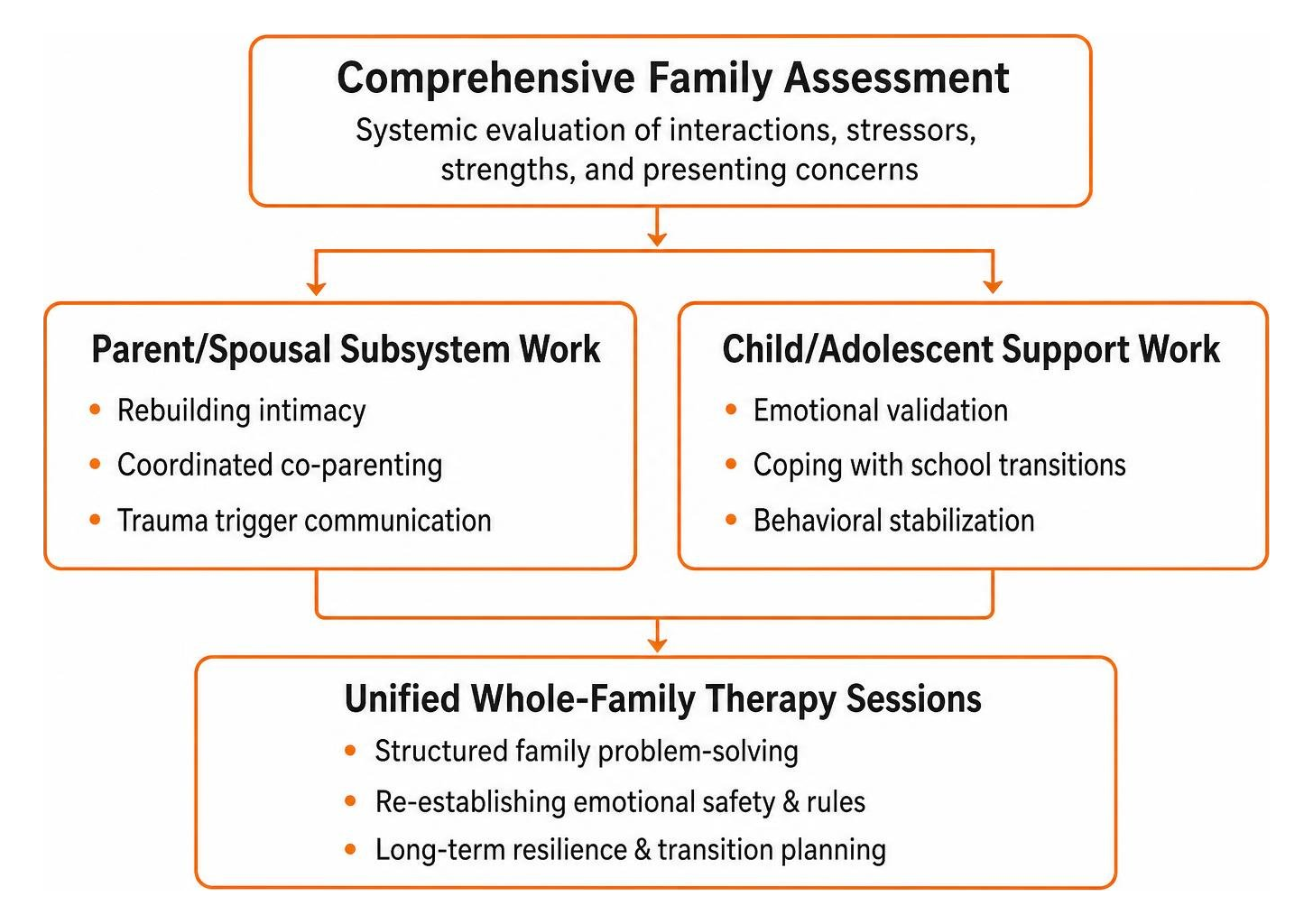
Clinical family therapy operates from a systemic perspective: an emotional shift or behavioral symptom in one family member inevitably influences every other member of the household.
During clinical treatment, a licensed master’s or doctoral-level clinician performs a thorough systemic assessment. Rather than treating a returning service member's PTSD or a child's school defiance in total isolation, our clinicians evaluate how these challenges intersect. We provide specialized family therapy designed to restructure maladaptive communication patterns, process historical attachment injuries, and establish collaborative parenting leadership that stabilizes the entire home environment.
When individual issues require deeper clinical focus—such as specialized trauma processing (EMDR or cognitive processing therapy) or adolescent psychiatric care—a clinical telehealth network coordinates these services seamlessly under one comprehensive treatment umbrella.
Confidentiality and Overcoming Mental Health Stigma
A primary barrier preventing military households from seeking mental health support is the fear of negative career repercussions. Service members frequently worry that documentation of psychological distress or family counseling will reach their commanding officers, threaten their security clearances, or derail promotional opportunities.
Civilian telehealth networks provide an essential layer of privacy and reassurance. Because care is provided outside the Department of Defense chain of command, families can engage in rigorous, confidential psychotherapy without concern that personal family discussions will appear in operational records. Furthermore, framing mental healthcare around family resilience and proactive wellness helps dissolve internal stigma, allowing active-duty personnel and their spouses to seek support early rather than waiting for relational crises to boil over.
Practical Steps for Accessing Remote Family Therapy
Accessing high-quality, continuous family therapy used to be difficult for families moving between bases every few years. Virtual teletherapy has eliminated these historic barriers, allowing military families to maintain steady therapeutic support regardless of where their orders take them.

To access remote family counseling smoothly:
- Verify State Licensure and Provider Mobility: Military relocations often cross state lines. Ensure your teletherapy network employs clinicians licensed across multiple jurisdictions so your family does not have to switch therapists every time you receive PCS orders.
- Evaluate Clinical Qualifications: Look for practices staffed by licensed master’s- and doctoral-level clinicians who understand military culture, combat operational stress, and the realities of service life.
- Check Technology and Privacy Standards: Virtual sessions must occur over dedicated, HIPAA-compliant telehealth platforms rather than standard commercial video apps to protect your family's personal discussions.
- Coordinate Multi-Location Attendance: If a service member is temporarily away for training or detached duty, verify that your virtual platform allows secure, multi-party connections so all family members can log in from separate locations.
- Select Flexible Care Packages: Select transparent telehealth care packages that accommodate erratic military schedules, field exercises, and shifting time zones without burdensome administrative friction.
Overcoming Geographic Barriers With Telehealth Family Therapy for Military Families
The mobile military lifestyle often makes traditional weekly, in-person clinic visits impractical. Telehealth bridges the gap across the entire deployment and relocation cycle:
- Unbroken Continuity of Care: Families moving from one duty station to another can continue meeting with the same trusted therapist before, during, and after a move, providing a steady anchor during chaotic transitions.
- Bridging Pre-Deployment and Reintegration Separations: When partners are geographically separated by training rotations or unaccompanied tours, joint virtual therapy sessions keep communication channels open and help align parenting strategies before the physical reunion occurs.
- Flexible Scheduling for High Operational Tempo: Evening and weekend virtual slots allow active-duty personnel to attend therapy without requesting time off from their duty section or navigating base traffic.
- Comfort and Privacy of Home: Discussing sensitive marital issues or guiding children through emotional exercises often feels safer in the privacy of your own living room than in an unfamiliar clinical office.
Frequently Asked Questions About Military Family Counseling
Navigating the landscape of family therapy, military resources, and telehealth can bring up many practical questions. Below are detailed answers to help your household make informed care decisions.
How Can Preventive Family Therapy Support Military Families?
Preventive family therapy serves as a proactive training ground before stress turns into a clinical crisis. Rather than waiting for communication to break down entirely, preventive approaches focus on:
- Normalizing Stress Responses: Teaching family members that anxiety during deployment or irritability during reintegration are common reactions to abnormal circumstances, reducing shame and self-blame.
- Strengthening Coping Strategies: Introducing structured problem-solving models, emotional regulation tools, and shared family routines that help households withstand high-stress periods.
- Building a Cohesive Narrative: Helping parents and children articulate their personal experiences, fears, and hopes surrounding military service, which fosters mutual empathy and connection.
- Preventing Long-Term Burnout: Identifying early risk markers of caregiver fatigue or adolescent distress, providing immediate adjustments before symptoms escalate.
What Should Families Expect From Clinical Family Therapy?
Clinical family therapy begins with a collaborative, multi-stage intake process:
- Initial Assessment: The therapist meets with parents and children individually and together to assess household communication patterns, individual mental health histories, trauma exposure, and specific relational goals.
- Personalized Treatment Planning: Together with your therapist, you will co-create clear, actionable goals—such as rebuilding marital emotional safety, reducing behavioral outbursts in children, or establishing consistent parenting boundaries.
- Active, Structured Sessions: Sessions combine guided dialogue, emotion-focused processing, psychoeducation, and behavioral rehearsals where family members practice new communication techniques in real time.
- Ongoing Clinical Progress Tracking: Licensed clinicians monitor measurable improvements in family functioning, mood regulation, and communication clarity, adjusting the care plan as transitions occur.
How Can Military Couples and Children Access Confidential Teletherapy During Active Deployments?
Accessing therapy while managing an active deployment or overseas rotation is entirely achievable through modern telehealth platforms:
- Secure Multi-Point Video Links: Secure video software allows a deployed spouse, an at-home partner, and a therapist to join the same secure session from different parts of the world.
- Civilian Privacy Guarantees: Working with civilian clinical practices ensures your therapeutic records remain strictly confidential and separate from military command channels.
- Time Zone Accommodations: Telehealth practices offer flexible appointment times designed to bridge multi-hour time zone differences between overseas duty stations and home bases.
- Direct Answers and Clear Guidance: If you have specific questions about platform security, technical requirements, or scheduling logistics, reviewing our frequently asked questions provides immediate clarity on getting started.
Conclusion
The challenges of military service—from extended wartime deployments to the recurring disruptions of geographic relocation—place extraordinary demands on the family unit. Yet, with the right structured support, these shared challenges can become catalysts for deeper family connection, emotional resilience, and lasting stability.
At All Points North Telehealth Therapy, we understand the operational tempo and emotional landscapes unique to service households. Our specialized virtual care brings licensed master’s- and doctoral-level clinicians directly to your living room through secure, HIPAA-compliant platforms. Whether your family is preparing for an upcoming deployment, finding its footing during reintegration, or navigating another PCS move, our team provides evidence-based, outcome-tracked care tailored to your household's exact needs.
Explore our comprehensive teletherapy services for military families today to establish an individualized resilience plan and ensure your household has the continuous, confidential support it deserves.