How to Find Confidential Therapy for Professionals

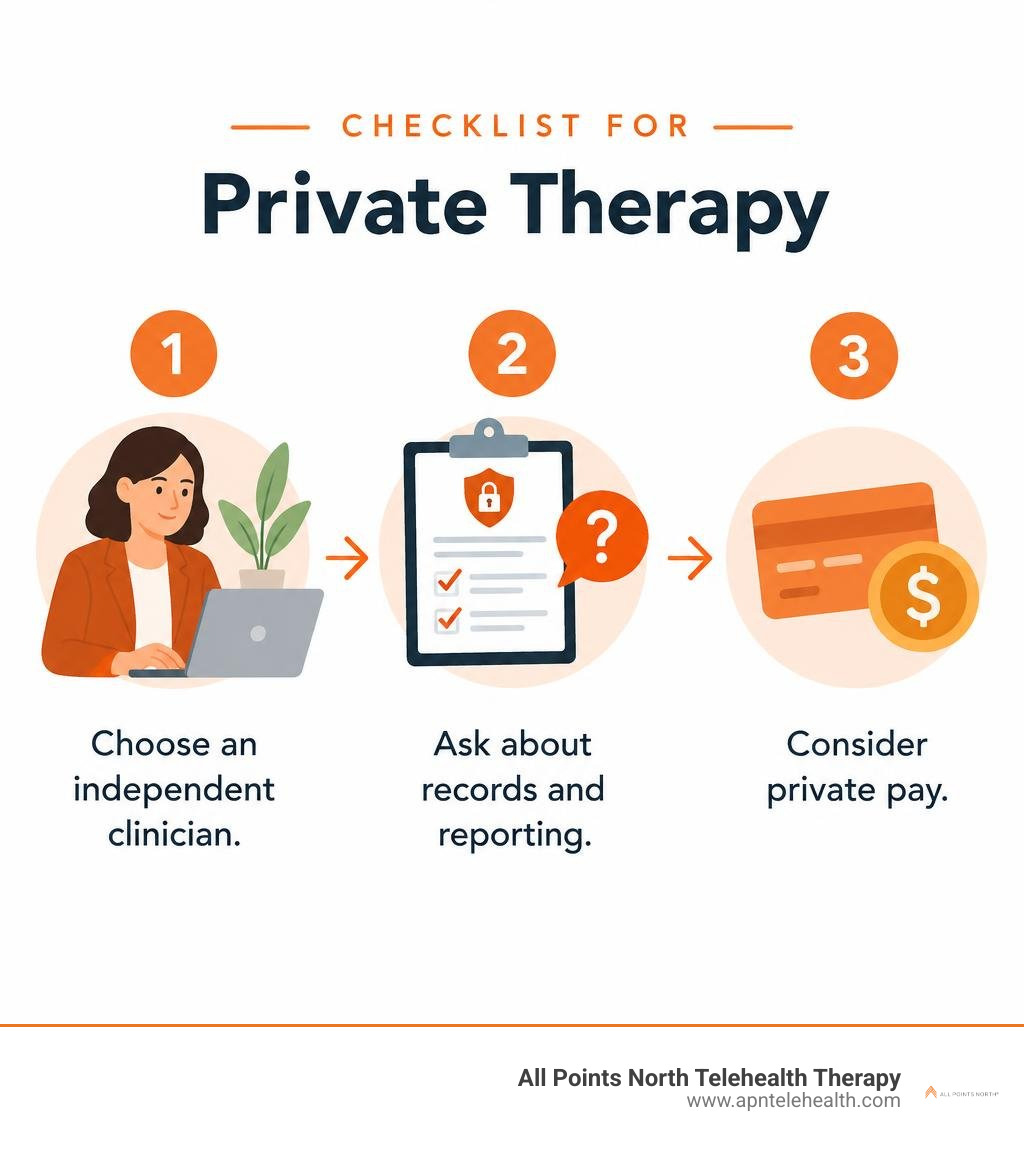
Start with a licensed therapist outside your workplace or professional network. Before booking, ask how they protect records, who can access them, and when they may have to share information. If you want to avoid an insurance claim, ask about private pay.
Therapy is generally private, but no therapist can promise absolute secrecy. Laws may require disclosure in limited situations, such as certain safety or abuse concerns. Licensing and reporting rules also vary by profession and state. Knowing those limits before your first session can help you get support without guessing at the career risks. The U.S. Department of Health and Human Services provides a useful overview of HIPAA privacy protections for mental health information.
Why High-Stakes Careers Demand Confidential Therapy for Professionals
High-stakes careers carry immense responsibility. Whether you are managing complex litigation, operating in a trauma center, overseeing corporate balance sheets, or engineering critical systems, the pressure to perform at an elite level never truly shuts off.
Historically, the concept of a profession traces back to medieval guilds and formal licensing bodies designed to enforce high standards of competence, public trust, and ethical conduct. While these frameworks protect the public, they can also cultivate an intense culture of perfectionism. For many leaders, admitting to chronic stress, exhaustion, or emotional strain feels like an existential threat to their livelihood.

When professionals operate under continuous, unaddressed pressure, severe mental health challenges frequently emerge:
- Executive Burnout: Chronic workplace stress leading to emotional depletion, depersonalization, and reduced professional efficacy.
- Imposter Syndrome: Persistent feelings of fraudulence and self-doubt despite objective career success, driving unhealthy overwork.
- Substance Misuse: Using alcohol or prescription sedatives as coping mechanisms to decompress or sleep, often hidden until crisis points occur.
- Secondary Traumatic Stress: Vicarious trauma absorbed by clinicians, emergency responders, and attorneys dealing with severe human suffering.
Despite the severity of these challenges, licensed experts frequently delay or avoid mental health care due to deep-seated anxieties over mandatory disclosures, peer gossip, and regulatory scrutiny. Dual relationships pose another hurdle: seeking therapy in a local medical or legal community often means sitting in a waiting room next to a colleague, a client, or an opposing counsel.
| Professional Field | Common Oversight Body | Typical Mental Health Disclosure Inquiries | Primary Confidentiality Risks |
|---|---|---|---|
| Medicine & Healthcare | State Medical / Nursing Boards, Hospital Credentialing Committees | Questions regarding active impairment or current psychiatric conditions affecting clinical competence | Credentialing delays, peer review scrutiny, loss of hospital privileges |
| Law & Judiciary | State Bar Associations, Character & Fitness Committees | Past or present conditions affecting the ability to practice law ethically and represent clients | Public bar inquiries, loss of standing, conditional licensure |
| Corporate Finance & C-Suite | Corporate Boards, SEC Regulatory Frameworks, D&O Insurers | Executive fitness evaluations, internal risk disclosures | Sidelining from leadership tracks, loss of board seats, investor panic |
Unique Privacy Concerns for Healthcare Providers and Attorneys
For physicians, surgeons, and nurses, the fear of career fallout is not unwarranted. Historically, state medical licensing applications frequently featured overly broad mental health questions, forcing clinicians to disclose past therapy attendance even when their condition had zero bearing on patient safety. Hospital credentialing committees and peer review boards have similarly scrutinized outpatient mental health visits, creating an environment where clinicians quietly struggle rather than seek help.
Attorneys encounter comparable friction. State bar character and fitness evaluations often probe into past behavioral health treatment during admission or reinstatement hearings. Furthermore, litigators constantly navigate strict client confidentiality duties; the thought that a therapist might accidentally expose sensitive case context or be dragged into legal discovery via a subpoena can deter lawyers from opening up altogether.
Legal Protections Under HIPAA and Federal Disability Laws
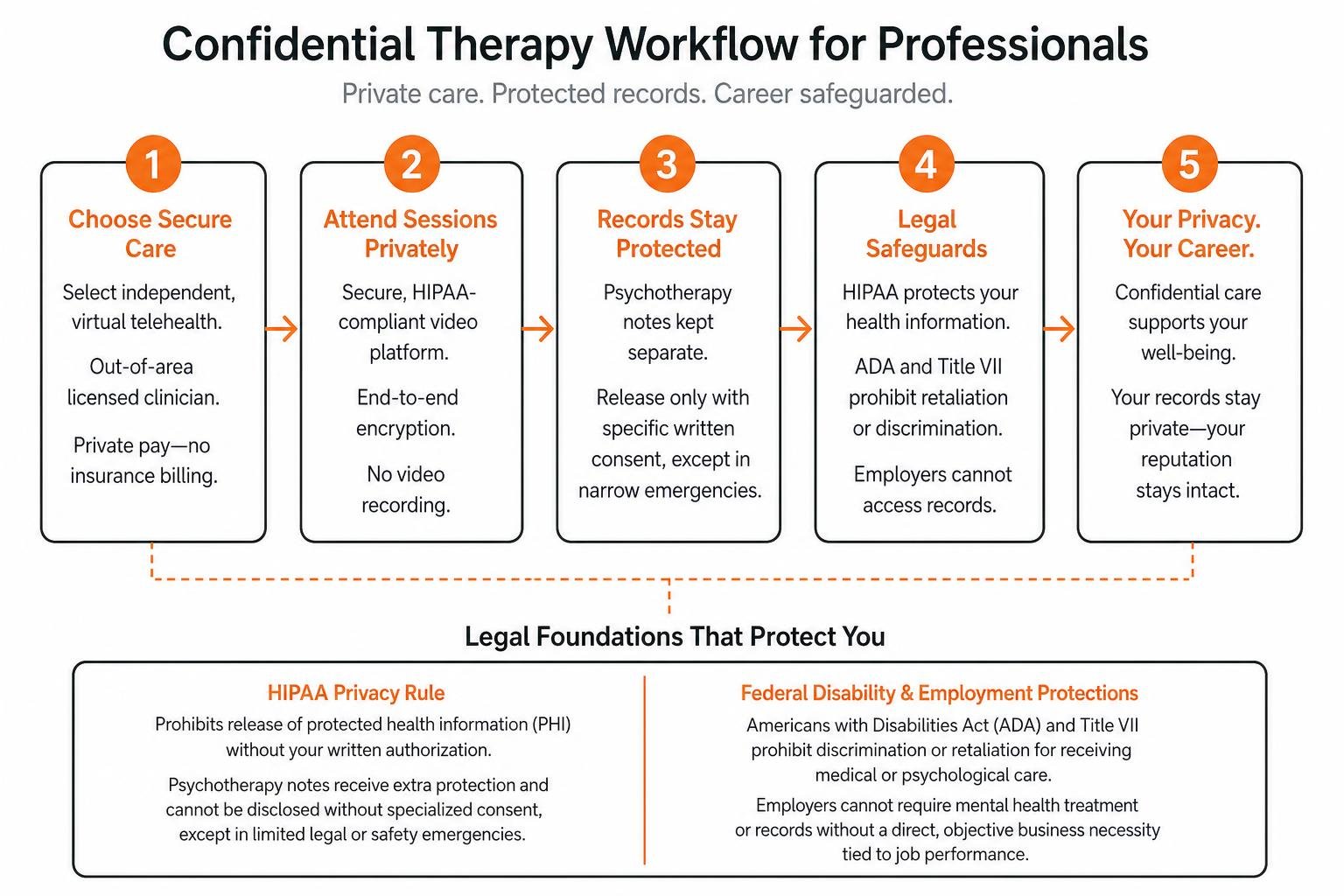
Fortunately, robust legal frameworks exist to protect your private clinical records from unauthorized snooping by employers, licensing boards, or colleagues. The Health Insurance Portability and Accountability Act (HIPAA) Privacy Rule sets stringent federal standards prohibiting covered entities—including licensed mental health providers—from releasing protected health information (PHI) without your explicit written authorization.
Crucially, HIPAA provides an extra layer of protection for psychotherapy notes. These are the private, detailed notes recorded by a mental health professional documenting private session conversations, kept separate from the rest of your medical record. Psychotherapy notes cannot be released to employers, insurers, or licensing boards without distinct, specialized patient consent, except in extremely narrow legal or safety emergencies.
Beyond HIPAA, federal statutes such as the Americans with Disabilities Act (ADA) and Title VII provide clear anti-retaliation protections. Employers are legally barred from discriminating against employees for receiving medical or psychological care, and they cannot mandate fitness-for-duty evaluations without establishing a direct, objective business necessity tied to job performance. Reviewing a provider's platform terms & conditions helps confirm that digital security protocols meet or exceed these federal requirements.
5 Crucial Safeguards to Protect Your Career When Seeking Therapy
Seeking professional care should never jeopardize the career you have spent decades building. By applying intentional safeguards, you can access top-tier clinical support while keeping your personal life strictly partitioned from your professional reputation.

- Opt for Independent, Virtual Telehealth Platforms: Avoid internal Employee Assistance Programs (EAPs) or on-site corporate wellness clinicians if you harbor privacy doubts. Opting for independent teletherapy completely eliminates the risk of running into colleagues in waiting rooms or having wellness data collated inside corporate HR systems.
- Utilize Private Pay Instead of Commercial Insurance: Bypassing commercial health insurance prevents mental health diagnostic codes (DSM-5) and billing logs from entering third-party databases like the Medical Information Bureau (MIB), where disability underwriters or future insurers could review them.
- Choose Out-of-Area Licensed Clinicians: Partner with doctoral- or master's-level therapists licensed in your state but located in a different city or region. This geographic firewall prevents overlapping social circles, hospital affiliations, or legal referral networks from compromising your privacy.
- Confirm End-to-End Encrypted Telehealth Architecture: Ensure your provider conducts sessions over secure, dedicated video platforms that meet HIPAA standards, utilize advanced encryption, and maintain zero video recording policies.
- Establish Clear Record Firewalls Upfront: During your intake consultation, explicitly define how session records are maintained, verify electronic health record (EHR) security parameters, and review curated telehealth care packages designed specifically for private, high-discretion care.
Evaluating Confidential Therapy for Professionals in Telehealth Settings
Telehealth has revolutionized mental health accessibility, offering busy professionals the ability to attend sessions from a private office or home without commuting. However, technical infrastructure matters immensely.
When evaluating virtual therapy, confirm that the platform adheres to verified security practices:
- Encrypted Video Connections: Video streams should never be stored, monitored, or routed through unsecured third-party servers.
- Strict Access Controls: Electronic records should be protected behind two-factor authentication, robust firewalls, and detailed audit logs that track every clinician who views a file.
- Comprehensive Privacy Standards: Carefully inspect the provider’s transparent privacy policy to verify that your contact details, appointment metadata, and session histories are never commercialized, tracked by third-party advertising pixels, or shared with external data brokers.
Bypassing Insurance Billing to Prevent Medical Coding Trails
While utilizing health insurance is financially practical for many, it inherently generates a verifiable paper trail. To reimburse a therapy session, an insurance company requires a formal mental health diagnosis under the Diagnostic and Statistical Manual of Mental Disorders (DSM-5), such as Major Depressive Disorder or Generalized Anxiety Disorder.
Once submitted, insurance claims pass through third-party clearinghouses, claims processors, and corporate database archives. In some self-insured corporate plans, aggregate utilization reports can reach benefits administrators. By electing private pay (direct out-of-pocket payment), you bypass the insurance clearinghouse entirely. No diagnostic claims are filed, no superbills are shared with third parties, and your clinical records remain isolated strictly within your therapist’s encrypted, HIPAA-compliant system.
How to Select the Right Clinician for Executive and Clinical Care
Finding the right therapeutic match involves more than just verifying clinical credentials; it requires finding a therapist who understands the specific cultural, ethical, and organizational demands of your field. A corporate executive, a trauma surgeon, and a managing partner each face distinct operational stressors that general counseling strategies might not adequately address.
At All Points North Telehealth Therapy, our master’s- and doctoral-level clinicians deliver evidence-based, outcome-tracked care tailored for leaders, executives, and licensed practitioners. We offer dedicated individual therapy modalities—including Cognitive Behavioral Therapy (CBT), Acceptance and Commitment Therapy (ACT), and specialized trauma protocols—supported by continuous clinical oversight and direct escalation pathways within our broader treatment network whenever deeper support is required.
Finding Specialized Confidential Therapy for Professionals
When vetting a therapist to support your professional journey, ask targeted questions during the initial consultation:
- “What is your experience working with licensed professionals, executives, or clinicians?”
- “How do you handle psychotherapy notes versus general medical records in your EHR?”
- “What is your precise protocol if you receive a third-party inquiry or legal subpoena?”
- “Are you licensed in my jurisdiction while practicing outside my local professional community?”
Working with a therapist fluent in high-accountability environments ensures you spend less time explaining your workplace hierarchy or regulatory pressures and more time developing actionable strategies for long-term psychological resilience.
Frequently Asked Questions About Confidential Therapy
Understanding your rights and clinical boundaries is essential before starting treatment. Below are answers to the most common inquiries regarding clinical privacy, licensing, and professional safety; you can also explore our broader frequently asked questions for further details.
Can my licensing board access my private therapy records without my consent?
In general, no. State licensing boards cannot perform unannounced fishing expeditions into private medical or mental health records. Under HIPAA and state privacy laws, your therapist cannot release any documentation without your written authorization.
A licensing board can typically only obtain therapy records if you voluntarily sign a release (for example, during a formal inquiry or health monitoring program agreement) or if a court issues a valid, non-appealable judicial order compelling specific record disclosures. Even in the rare event of a formal subpoena, ethical clinicians work with legal counsel to narrow the scope of disclosure to protect extraneous psychotherapy details.
Does using private pay completely shield my treatment from my employer?
Yes. When you pay for therapy out-of-pocket without submitting claims to a workplace health plan, there is no mechanism for your employer to discover that you are attending therapy.
Employers do not have access to private bank accounts or credit card statements, and independent private-pay providers do not interface with employer-sponsored health plans, human resources departments, or Employee Assistance Program administrators. Your engagement remains strictly a private agreement between you and the clinician.
What mandatory reporting obligations apply to therapists treating professionals?
Every licensed therapist is bound by clear, legally mandated exceptions to confidentiality. These mandatory reporting obligations apply equally to all clients, regardless of profession:
- Imminent Risk of Severe Harm to Self or Others: If a client presents an active, immediate danger of suicide or homicide, therapists have a legal duty to intervene and protect life.
- Suspected Child, Elder, or Dependent Adult Abuse: Clinicians are legally required to report reasonable suspicions of ongoing abuse or neglect involving vulnerable individuals.
- Court Orders: A legally binding order issued directly by a presiding judge in an active legal matter.
Therapists do not report workplace stress, imposter syndrome, mild-to-moderate depression, recreational substance use, or past mistakes to your employer or licensing board. Clear, active, and catastrophic impairment that presents an immediate, tangible danger to public safety represents the only threshold for emergency professional interventions.
Conclusion
Proactive mental health care is an essential strategic asset for sustained leadership, cognitive clarity, and career longevity. Experiencing anxiety, professional exhaustion, or emotional burnout is not a sign of career incompetence—it is the natural outcome of operating in unrelenting, high-stakes environments without adequate recovery systems.
You do not have to jeopardize your career, licensure, or reputation to receive transformative mental health care. By partnering with independent, experienced clinicians who prioritize digital security, clear boundaries, and out-of-network privacy, you can safeguard your professional future while restoring your well-being. Discover tailored, highly secure clinical support designed specifically for leaders through our APN professional programs.